Education Research
“We use 3D printing a lot. It is not just for testing, we also use it to create parts that go directly into the tunnels of the Large Hadron Collider.”
CERN case study in numbers
CERN, the European Organization for Nuclear Research, was founded in 1954 and is dedicated to studying the fundamental particles that constitute matter. Original Prusa printers run across its departments, and some of what they print goes straight into the tunnel.
- 12,000+people at CERN
- 27 kmthe LHC ring
- 100 munderground
CERN was founded in 1954 to study the fundamental particles that constitute matter, and has since earned several Nobel Prizes.
A 27 kilometer machine that the Earth keeps moving
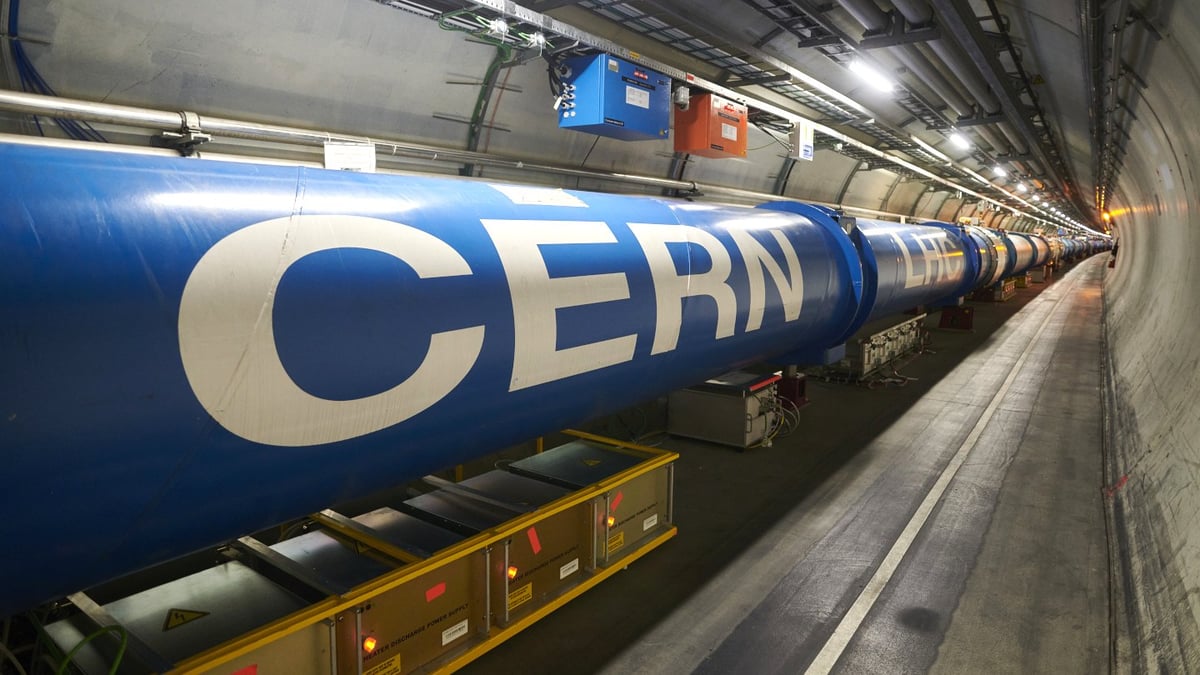
- ProblemThe Large Hadron Collider, buried 100 meters underground and spanning 27 kilometers, allows scientists to test theoretical predictions in particle physics. Given the unique size and location, maintaining perfect alignment for experiments is challenging due to the Earth's movements.
- SolutionCERN engineers design and produce the sensors, control systems, and accelerators to measure and adjust the positions of the large magnets, ensuring precise alignment. Thanks to the scale and complexity, it is only natural that everything must be custom made. 3D printing is used extensively, not only for testing but also for creating parts that are installed directly in the tunnels.
- Value3D printing cuts costs with models used directly in the LHC and speeds up creation of parts for extreme environments.

A bead that carries a wire for 200 meters
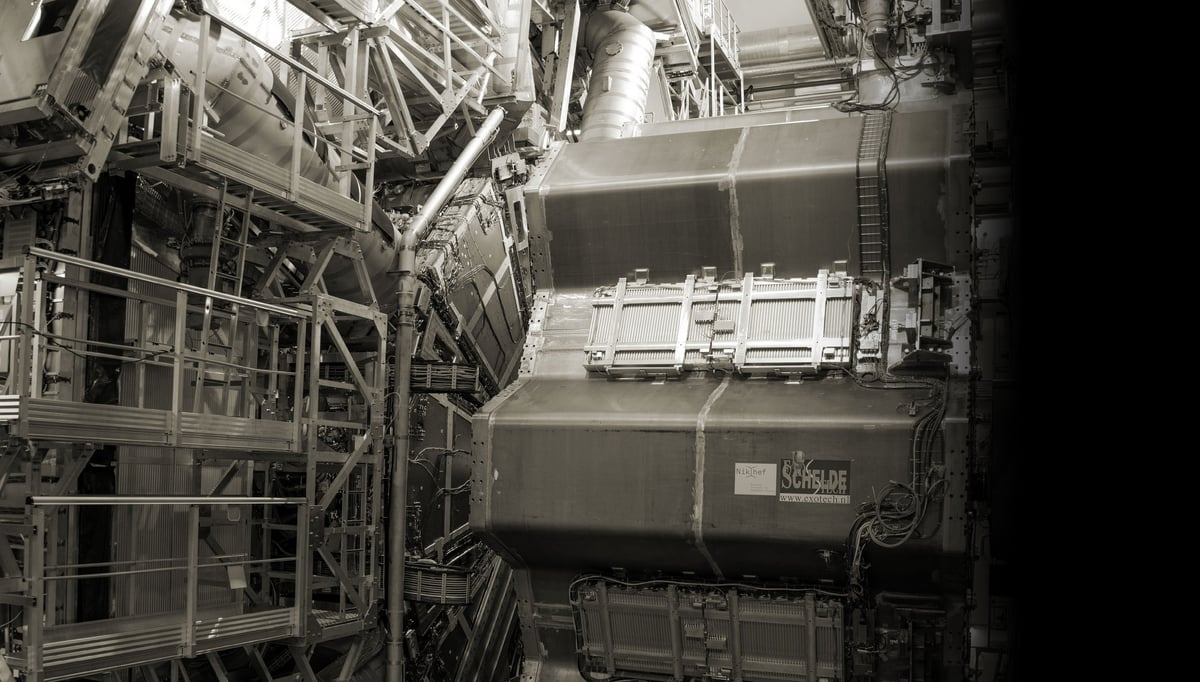
- ProblemDistances in a critical part of the LHC are measured by a fragile wire spanning 200 meters. Many pieces of equipment utilize fragile fiber optics, which must be safeguarded to prevent sharp bends that could break the fibers and disrupt signals.
- SolutionA bead made on an Original Prusa 3D printer carries the wire and protects it from damage. Around it, printed casings and guides safeguard the optics: the FSI photodetection module has a printed component that organizes the optical fibers into neat coils so they never bend sharply.Printed onPrusa CORE One
- ValueThese are not models of parts. They are the parts, in the tunnel, doing the measuring, printed because at this scale everything is a one off anyway.

Test it in plastic before you commit the expensive material
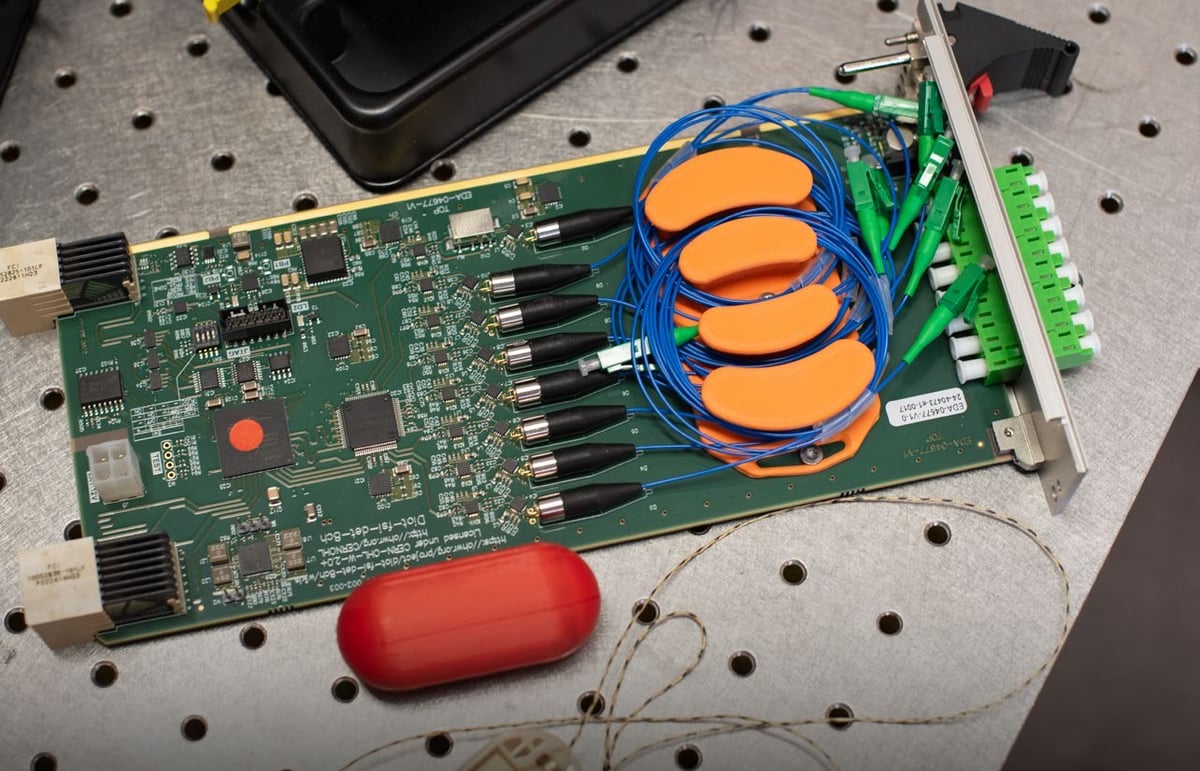
- ProblemNew components for the LHC must be thoroughly tested to verify the reliability of tools before using more expensive materials.
- Solution3D printing is crucial during the testing phase. An initial feasibility test print for a Hydrostatic Levelling System sensor was made to explore the design. A prototype connector for the Wire Positioning System sensors went the same way. Printed tubing connectors are made custom and stay easily modifiable, a property that a machined part loses the moment it exists.Printed withPrusament PETG
- ValueOften, these printed models are even used as final products. It reduces expensive material usage in prototype testing, and produces final use prototypes quickly for high stakes projects.

Changing the sample without turning the beam off
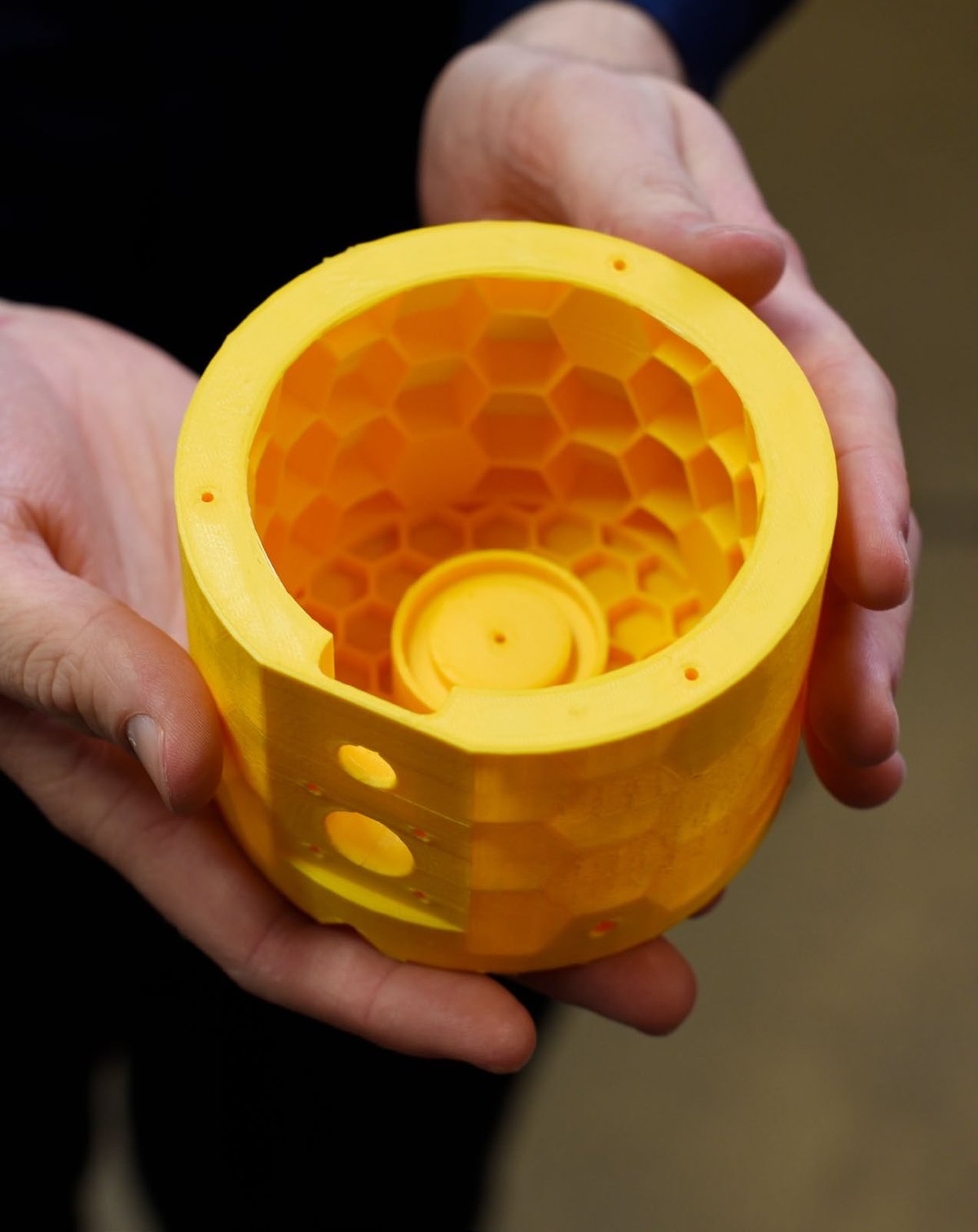
- ProblemCERN’s CLEAR accelerator aims a radiation beam at cancer cells for cancer treatment research. The experiment needs rapid sample changes, and with radiation in the room, human safety comes first. The VITO project has the same problem in a different shape: liquid samples in a high vacuum setting, where opening and closing the equipment to change one costs time.
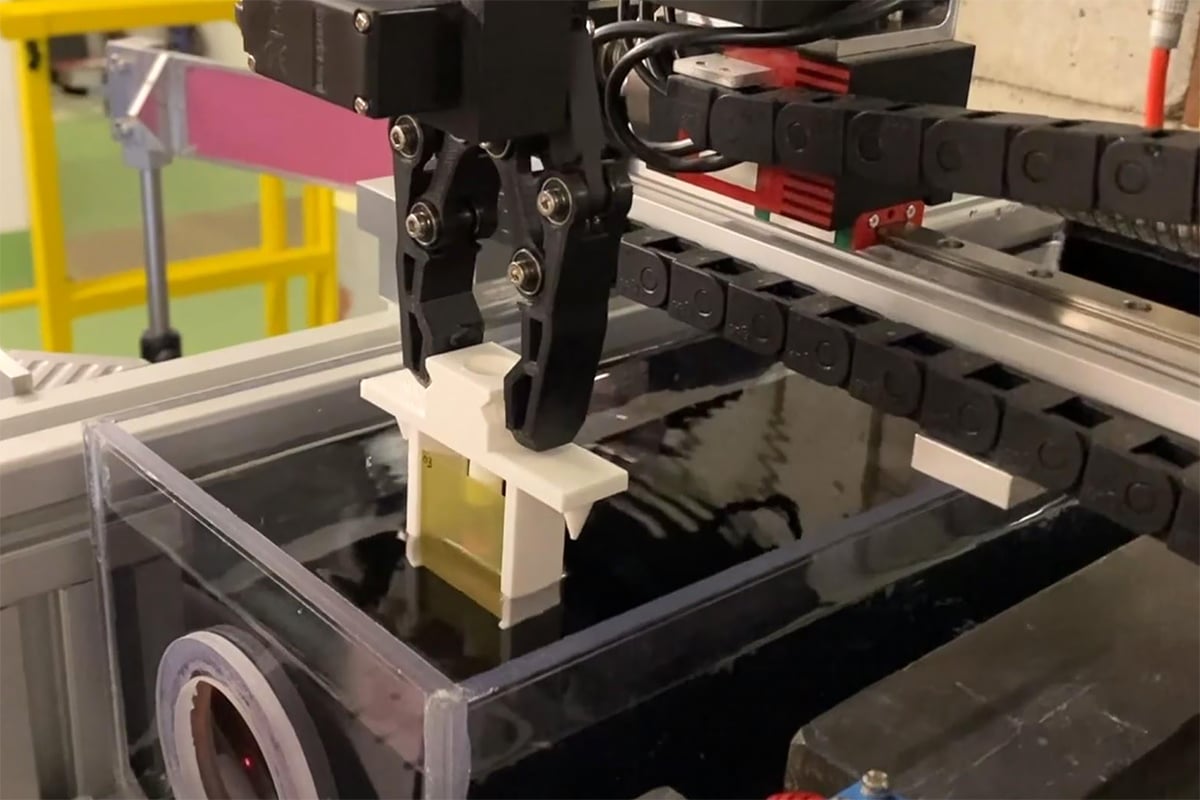
- SolutionAt IdeaSquare, a workshop that connects scientific innovation with societal needs, a 3D printed robotic solution was developed to swap the samples efficiently and safely without interrupting the beam. For VITO, a special holder and a 3D printed 8 mm capillary let the samples change without stopping the experiment.Printed onOriginal Prusa MK4S
- ValueThe beam keeps running, the people stay out of the room, and the experiment stops waiting for its own housekeeping.
“3D printing allows scientists and engineers to quickly create prototypes and push the boundaries of what is possible.”
Dina Zimmermann, Structural engineer at IdeaSquare, CERN

Still not sure where 3D printing fits your lab?
See what other organizations print, a classroom, a hangar, a car plant, a trauma center.





Customer story ETH Zurich
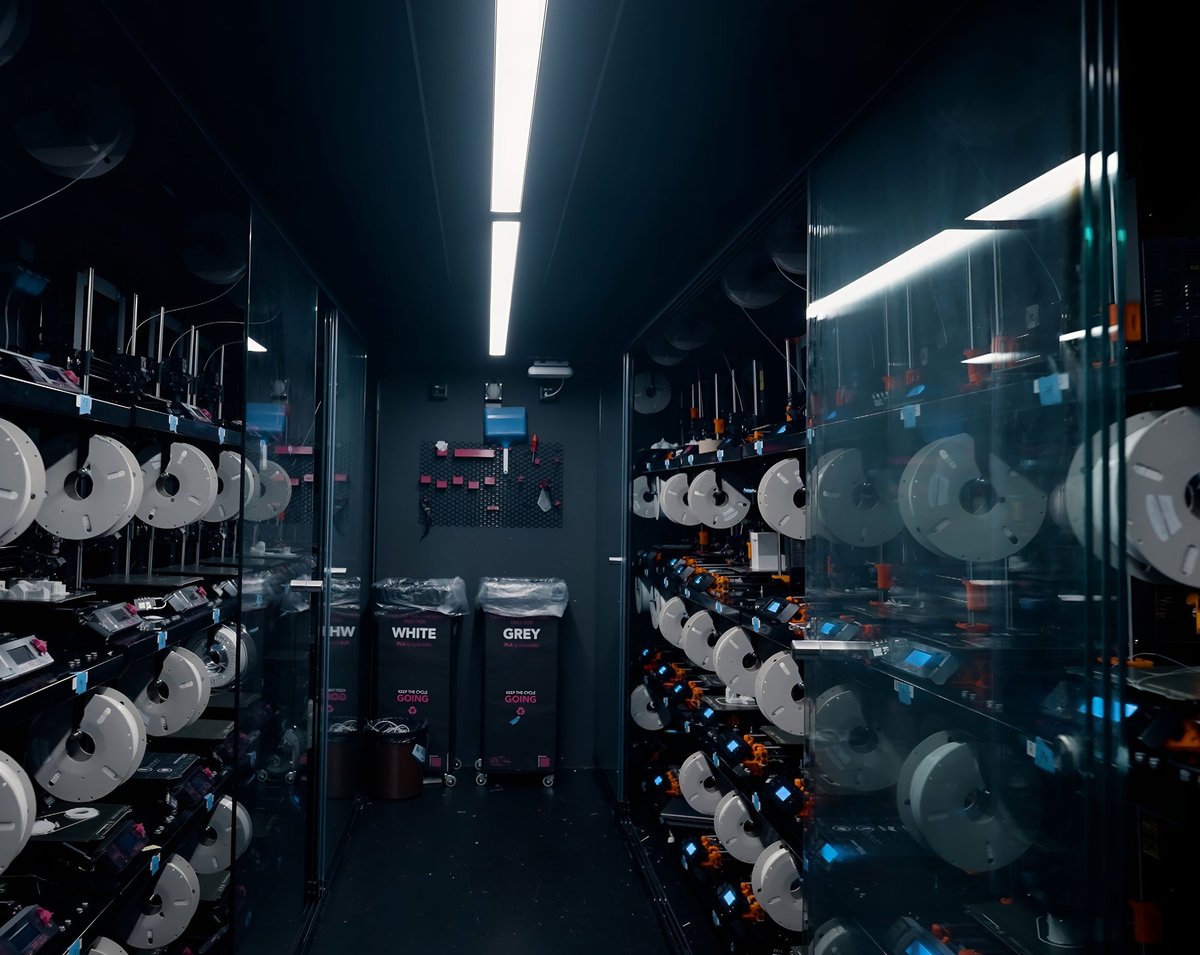
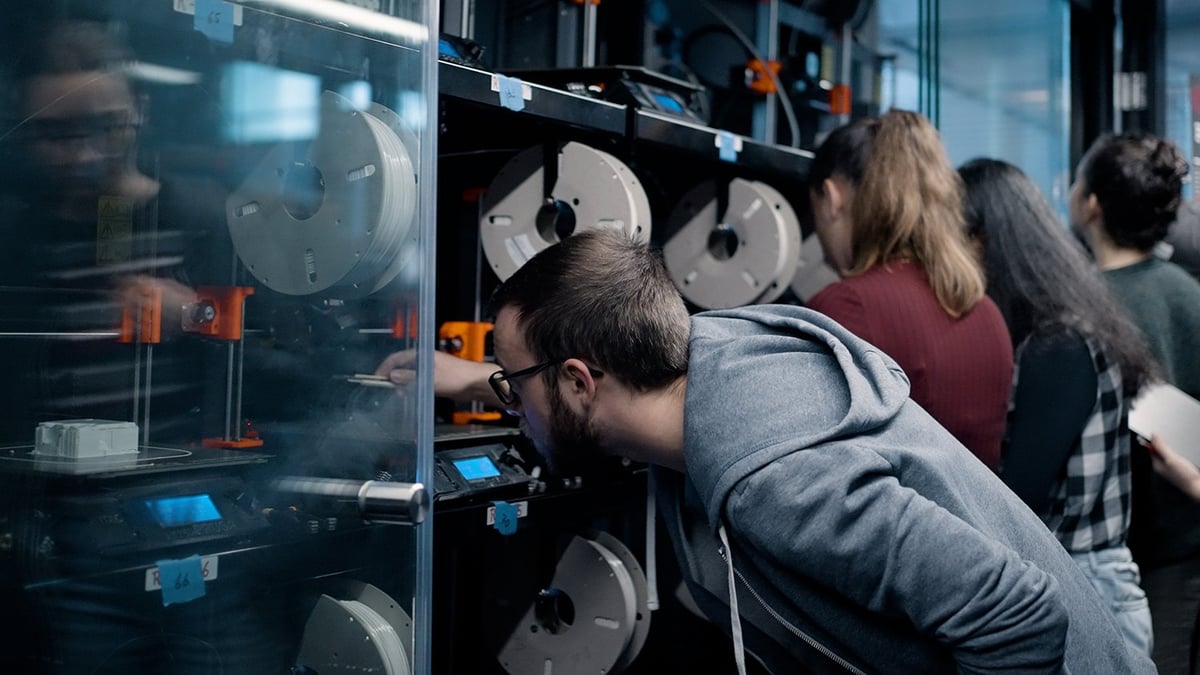
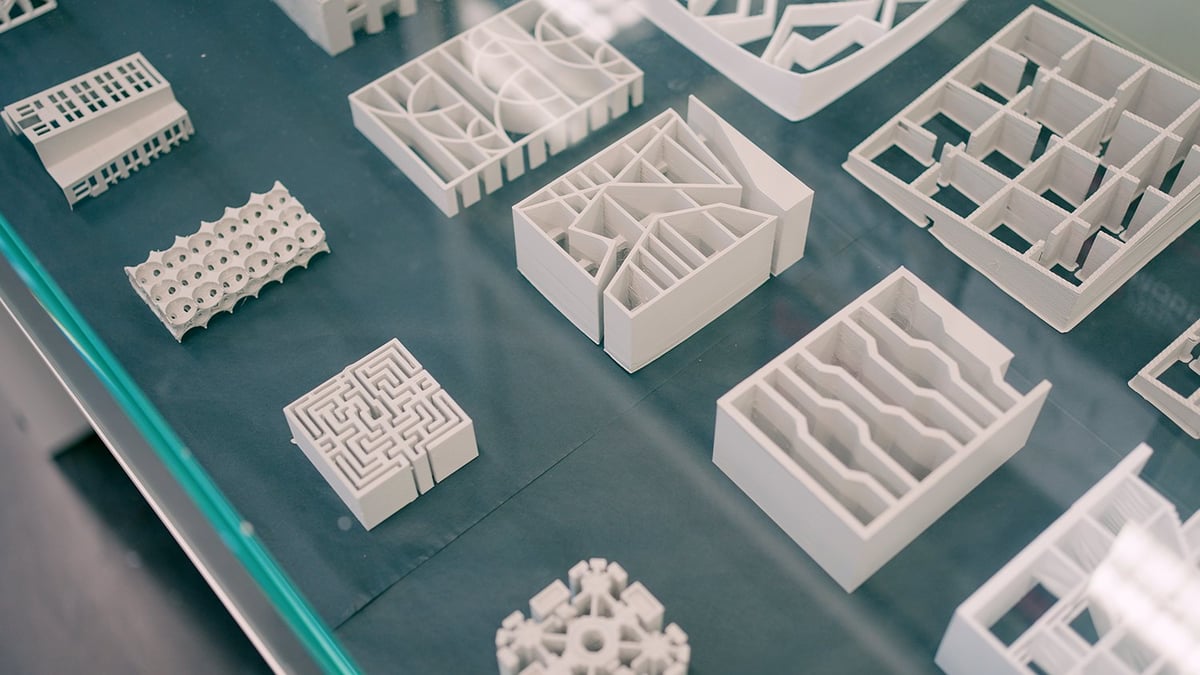
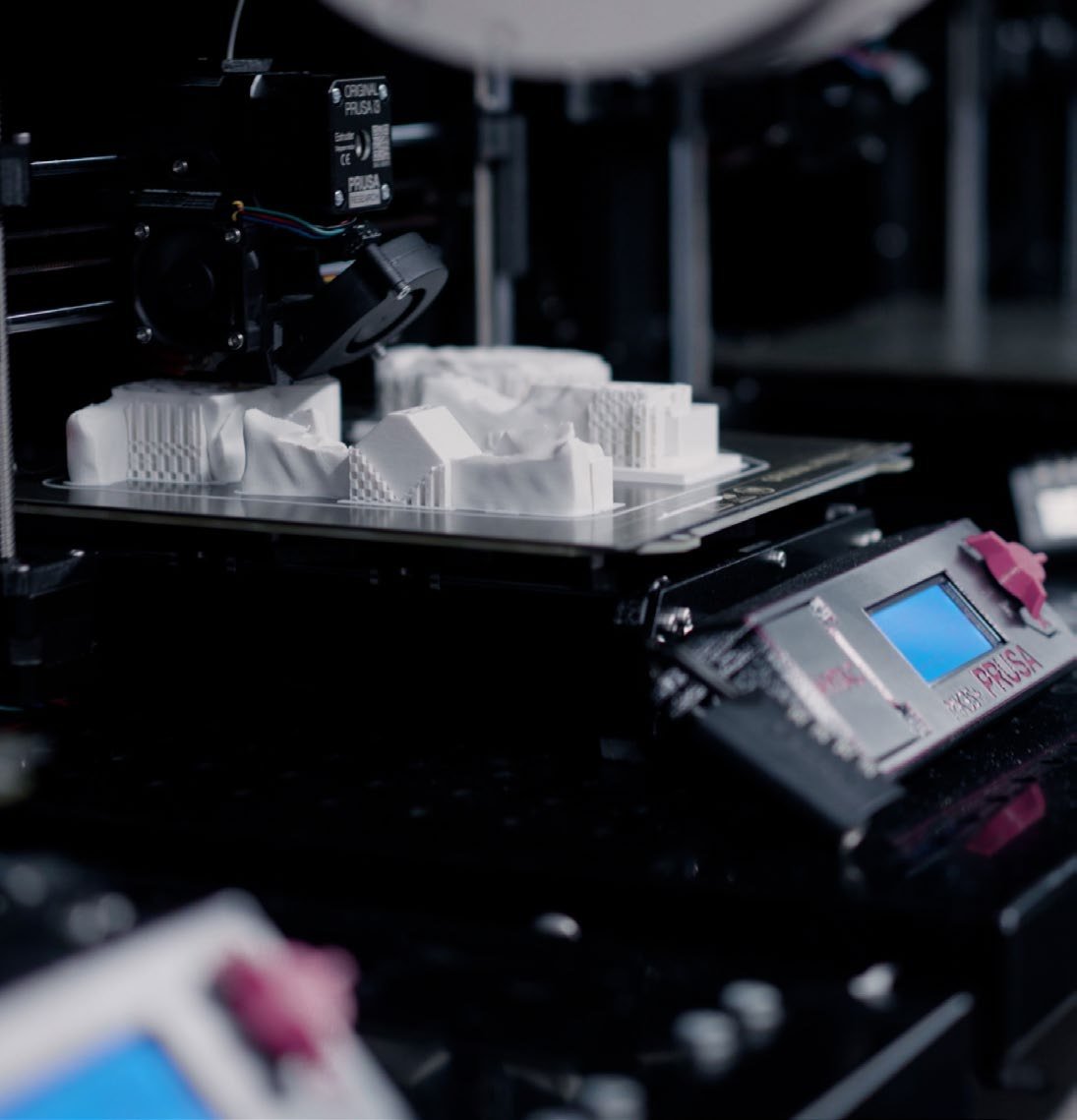
Every one of ETH Zurich’s 100+ printers was built by a student
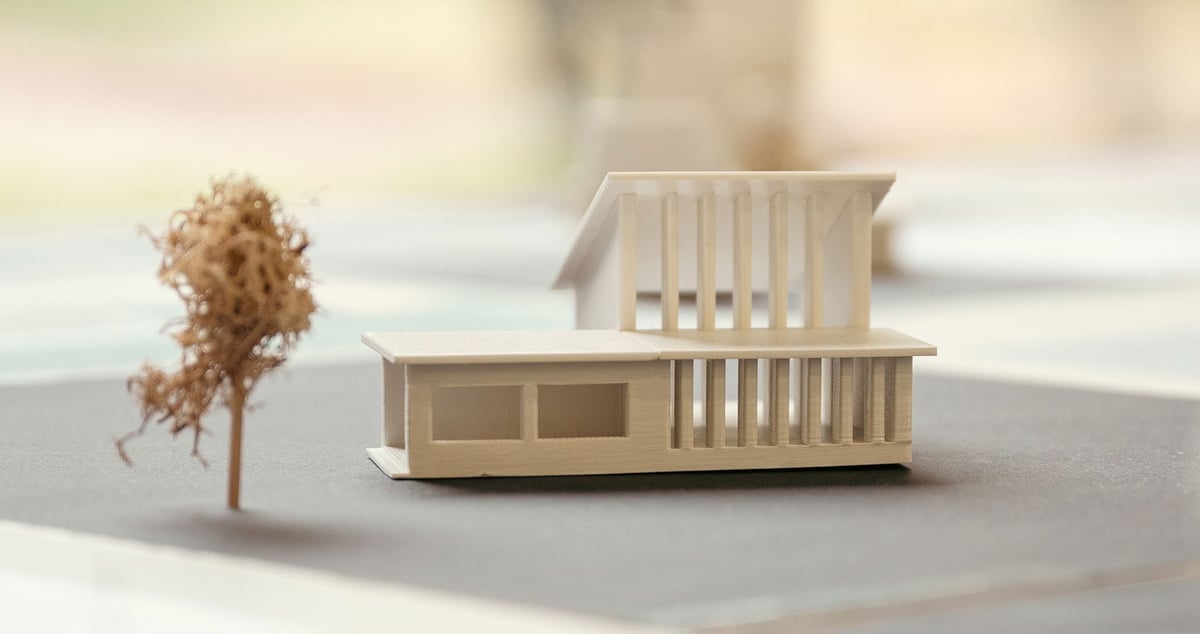
The architecture department’s HYTAC programme trains 300+ students a term, and each of them assembles an Original Prusa kit in two days before printing anything. It started as a maintenance problem: the university could fund the machines, but not the people to keep them running.
- 100+Original Prusa printers
- 300+students trained per term
- 20printers replaced each year
“I cannot imagine a world without 3D printing. It just would not work!”


Your team’s questions, answered
What researchers and engineers usually ask before deploying printed parts.
Research Engineer
Prototyping and final use
Lead Scientist
Extreme environments
Facility Manager
Customization