Enterprise Automotive
“It is just a matter of time before all Formula teams have a 3D printer.”

AIX Racing case study in numbers
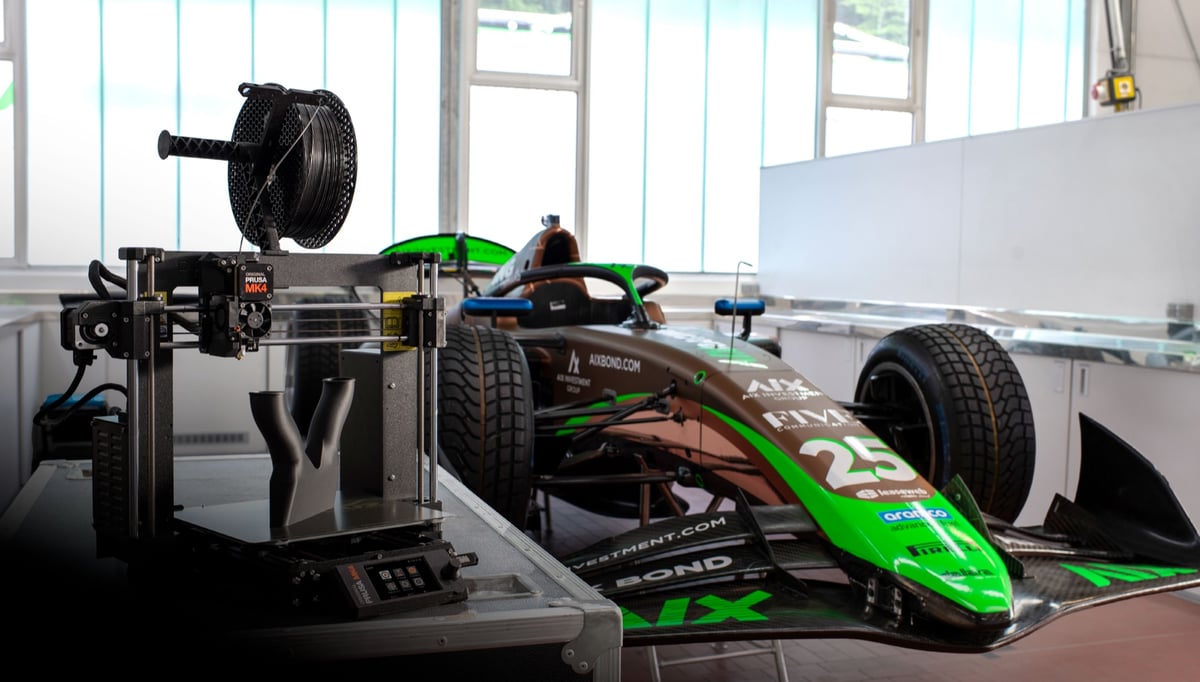
AIX Racing Team runs Formula 2 and Formula 3 cars out of Berlin and Dubai, 32 people on a fourteen race F2 calendar, in championships where every team has the same car and the same engine. The difference is what the engineers do with it, and one of their machines flies to the track.
- 32employees
- 14F2 races a year
- ~6days of pre season testing
Pre-season testing is spread across just 2 to 3 official test sessions, leaving almost no room to learn before the season.
Fourteen races, and almost nowhere to test
- ProblemFormula racing is about speed both on the track and in the garage. There are 14 F2 races a year, and the rules leave almost no room to learn between them: pre-season testing is limited to about six days, spread across two to three official test sessions, and in-season testing is almost nonexistent- no private tests allowed, only a few official days.
- SolutionIn Formula 2, Formula 3, and Formula 4, every team uses the same car and engine. What makes the difference is the driver’s skill and the engineers who fine-tune the machines, which is why AIX Racing implemented 3D printing. It is now ever-present in the workshop: functional parts, prototypes, clever tools and jigs.Printed onOriginal Prusa MK4SPrusa XL+
- ValueThe team stopped waiting on somebody else’s schedule. The main reason for keeping the printers in-house is better control over time and resources, and control over fit: several large parts often have to fit together perfectly, leaving no margin for error.

Custom Tools for Competitive Racing
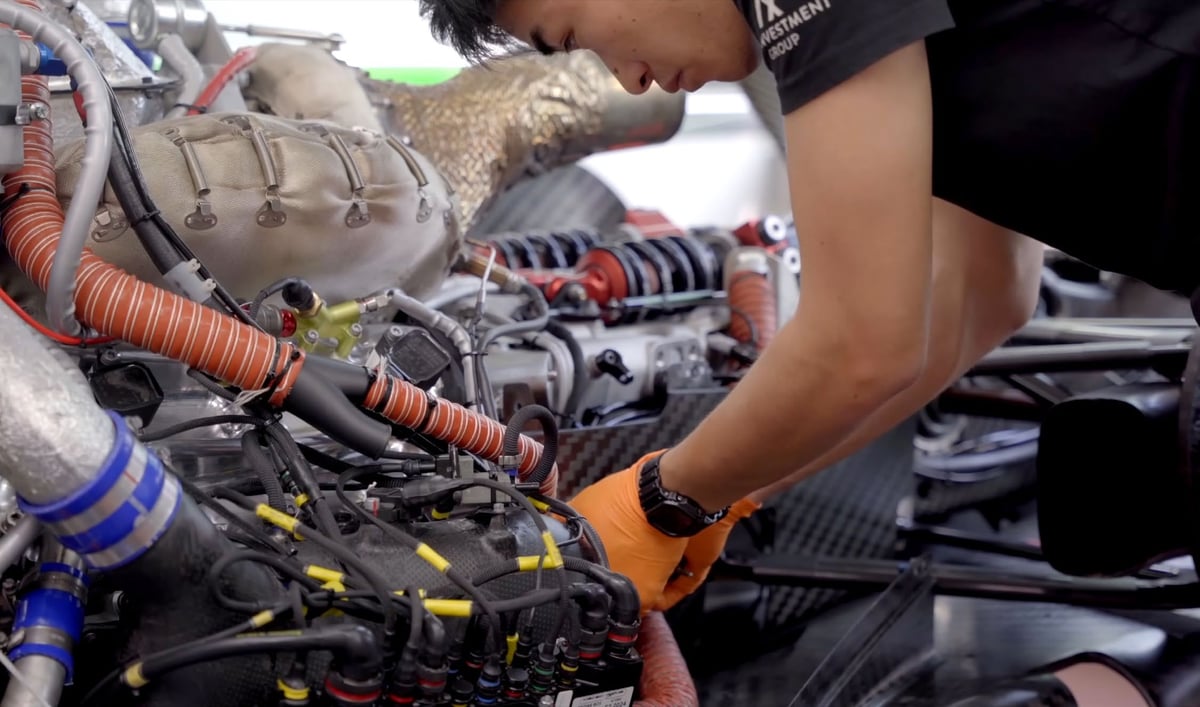
- ProblemAt every race, some parts break, and some components or adjustments need to be remade or replaced quickly. A garage stocked from a catalogue can only answer with what the catalogue has.
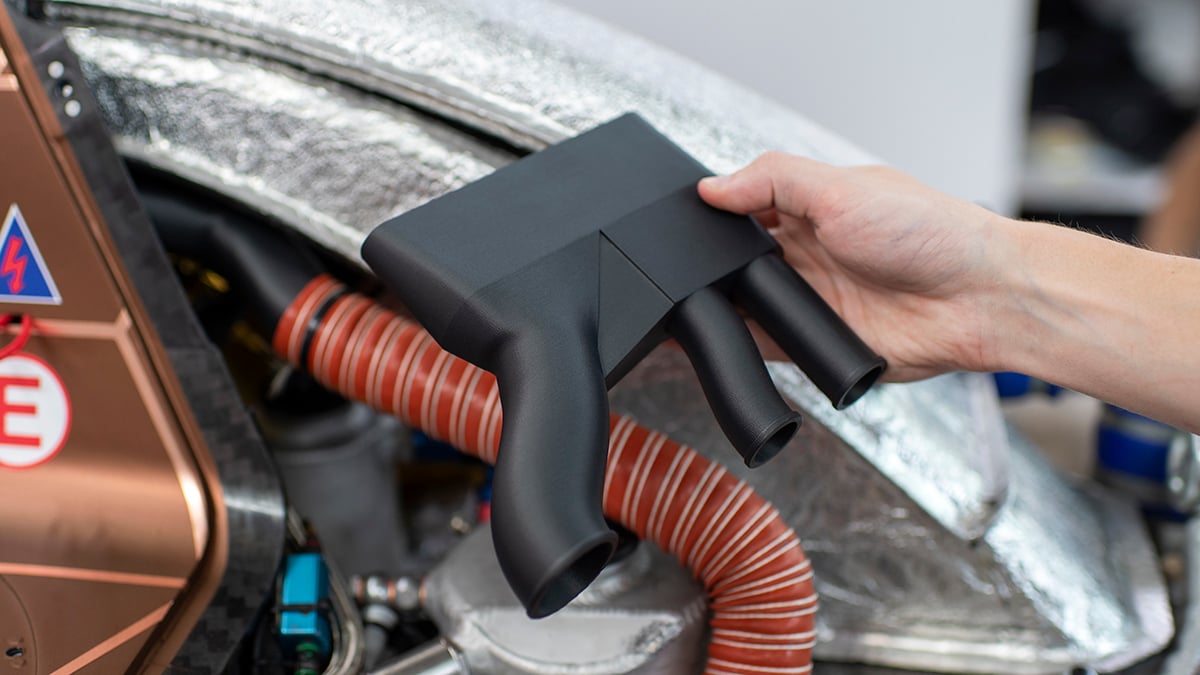
- SolutionThe AIX Racing workshop uses 3D printing to create exactly what the catalog lacks. They produce custom tools like a screwdriver with a different-sized bolt on each side, tailored to fit an individual mechanic's hand. They also print complex components such as uniquely shaped airflow tubes, specialized engine cooler mounts, and custom battery holders. The team relies on PC Blend Carbon Fiber for its heat resistance and durability, alongside Prusament PETG for simple prototypes, Resin Model for detailed models, and Flex for moving parts. To protect their competitive advantage, mechanics cover these printed parts with tape that mimics polished carbon fiber before taking them to the pit lane.Printed onPrusament PC-CFPrusament PETGPrusament TPU
- ValueA custom tool tailored to a mechanic saves crucial seconds in high-pressure moments on the race track. Specialized components like custom airflow tubes allow the team to react instantly to whatever the race throws at them. Fabricating these highly specific parts would be incredibly complicated and time-consuming without the speed and flexibility of on-site 3D printing.

Meeting Safety Zone Requirements
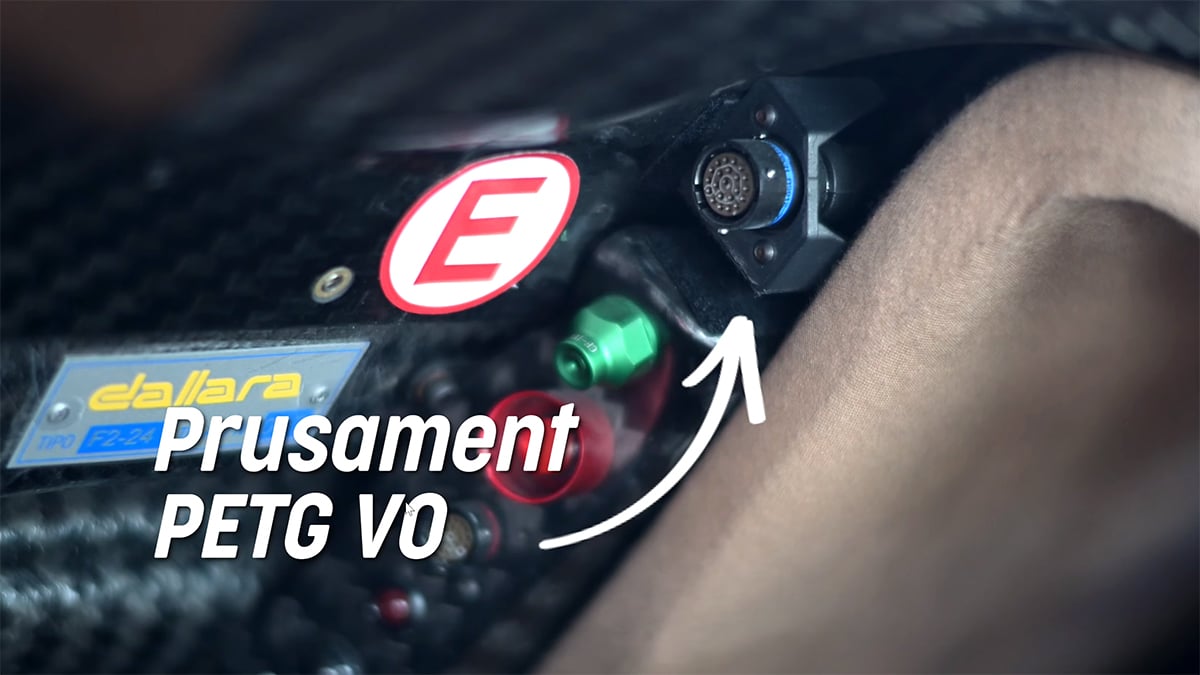
- ProblemThe driver cabin is classified as a safety zone in competitive racing. Strict rules dictate that every component installed in this area must be completely fireproof. A printed accessory cannot be used in this space based solely on its functional usefulness if it fails to meet these safety regulations.
- SolutionThe team overcomes this restriction by printing cabin accessories using Prusament V0. This specialized self-extinguishing filament lets engineers use the same 3D printers and workflows they use for the rest of the garage. They simply switch to the one material that meets the strict safety rules.Printed onPrusament PETG V0
- ValueThe safety zone is no longer a restricted area for additive manufacturing. The engineer can now design, print, and fit every custom component that drivers interact with at the same speed and precision as any other part on the vehicle.

Mobile 3D Printing at the Race Track
- ProblemAIX Racing operates from headquarters in Berlin and Dubai, but their races take place worldwide. When a part breaks or a component needs an immediate adjustment at the circuit, the team cannot wait for a replacement to be shipped from its main facilities. The highly restricted racing calendar offers absolutely no spare time to delay essential maintenance.
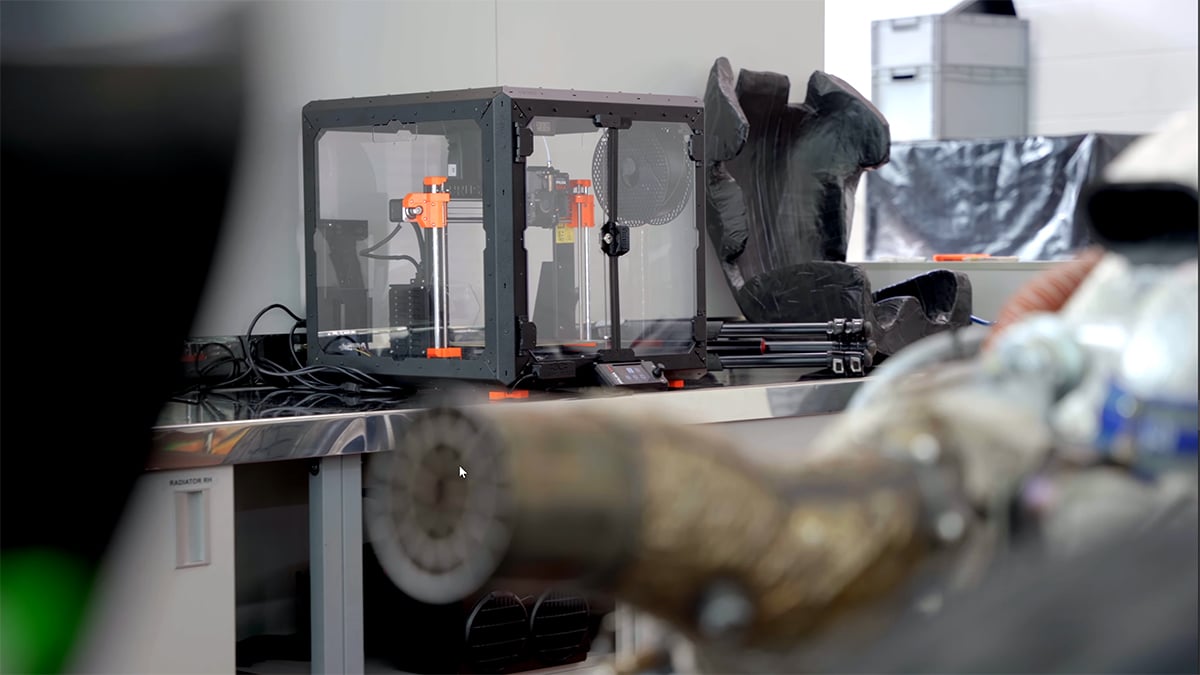
- SolutionTo solve this logistical challenge, the team packs a Prusa machine and takes it with them as they travel worldwide. Whenever a piece of equipment breaks during a busy race weekend, the mechanics manufacture the exact replacement right where the car is.
- ValueThis highly portable setup ensures that critical repairs and part replacements are handled directly on site. The engineering team can resolve unexpected hardware failures overnight at the latest, keeping their cars completely competitive without relying on external shipping or off-site workshops.
“3D printing makes everything easier for us. It is fast, on the spot precise, and independent of additional suppliers.”
Arthur Rencker, chief engineer of AIX Racing

Still not sure where 3D printing fits your production?
See what other enterprise companies print: an architecture studio, a collider, a rapid prototyping shop, a car plant.


Customer story MASSLAB
MASSLAB prints master plans clients can rearrange
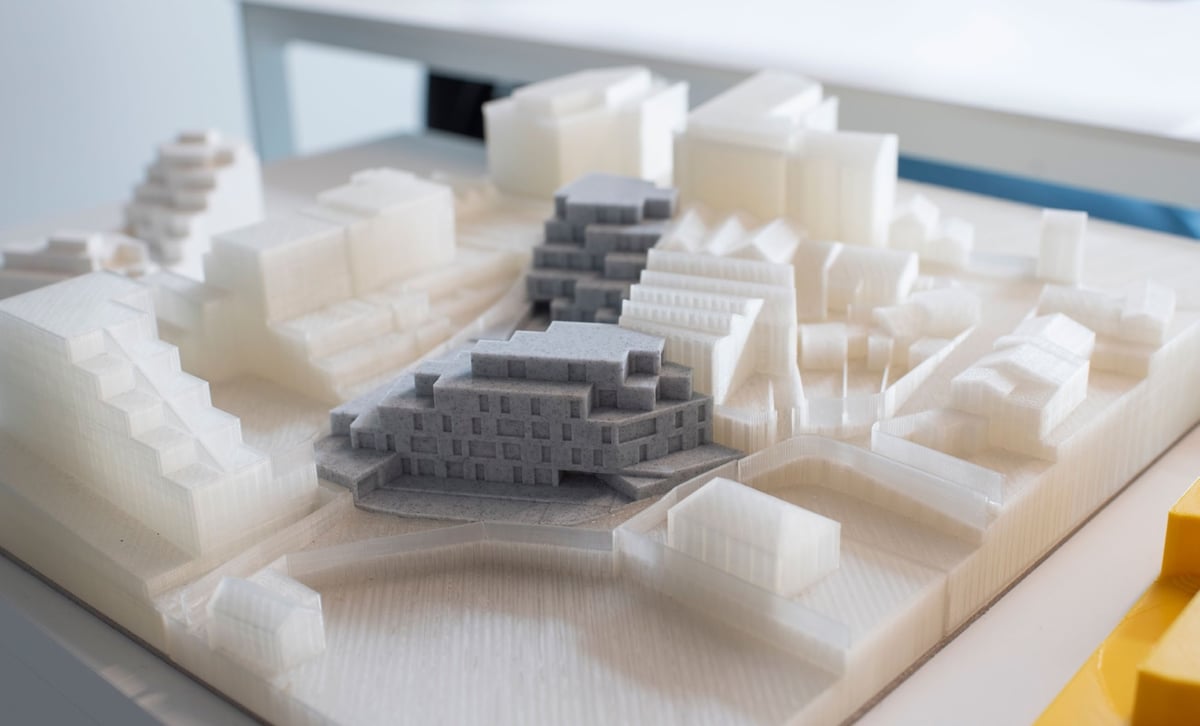
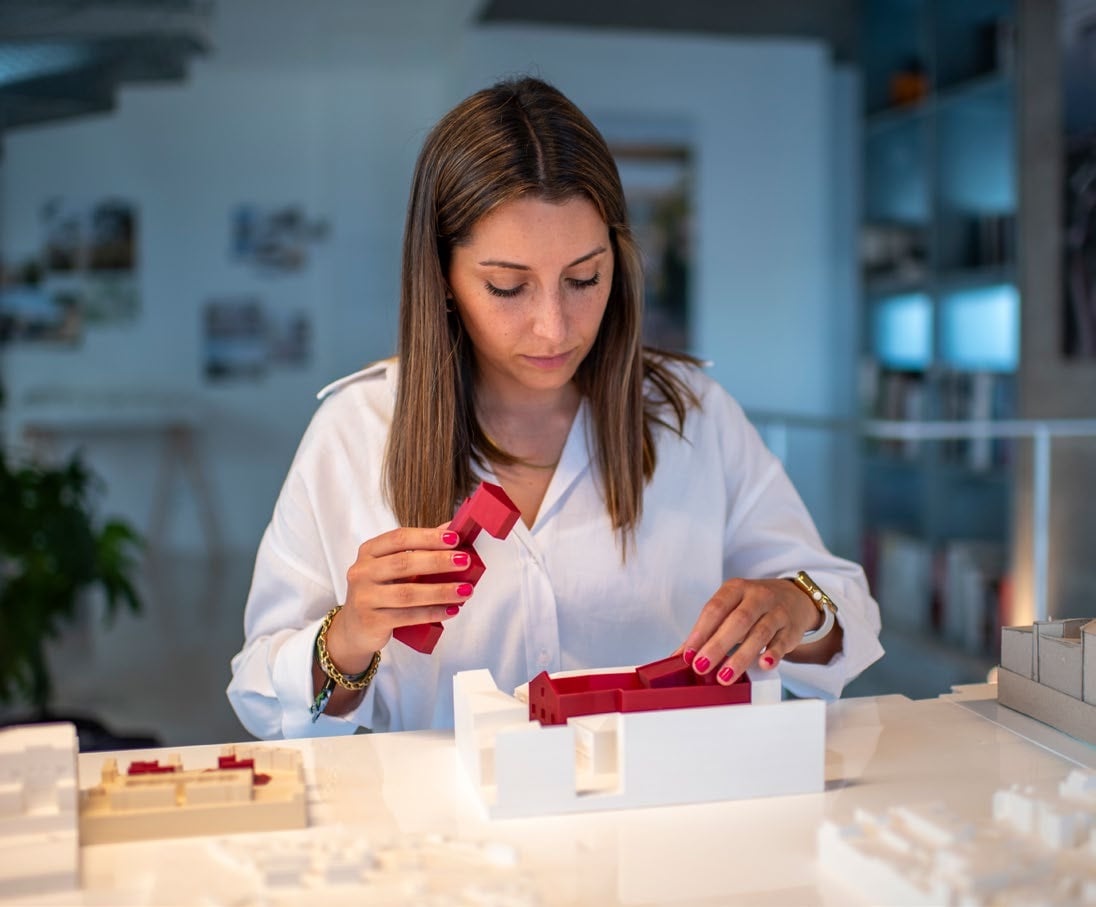
The 40 person Porto architecture studio has printed nearly all of its models since 2021. Buildings, parks and terrain come out as separate swappable pieces, so a roofline changes during the meeting instead of after it.
- 40people in Porto
- 2021nearly all model making printed since
- 2dual head Original Prusa XL printers
“MASSLAB models buildings, parks and terrain as individually swappable printed pieces, so a master plan can be rebuilt on the table instead of remade.”


Your team’s questions, answered
What engineering, quality and procurement usually ask before the first print.
Manufacturing Engineer
Tooling and production
R&D Engineer
Materials and durability
Quality / Traceability Engineer
Quality assurance
Maintenance Technician
Spares and repairs
Procurement Lead
Purchasing