
Enterprise Healthcare
“Using 3D‑printed models in the dissection room allowed us to test the mechanical properties of the implant and perform a complete dry run.”
University Hospital Brno case study in numbers
University Hospital Brno and its Trauma Surgery Department performed a unique series of surgeries that saved a patient's leg and allows him to walk again. Original Prusa 3D printers played a crucial role in preoperative preparation.
- 213bones in the human body
- 7ligamentous structures on the talus
- 4months from accident to permanent implant
30+ days to prepare for the unique custom titanium implant operation.
2 Prusa 3D printers were used for preoperative preparation and spacer moulds.
1 custom spacer mould printed in-house allowed the patient to practice moving his leg.
1 full dry run was successfully performed using 3D-printed plastic models in the dissection room.
Creating a temporary antibiotic cement spacer
- ProblemIn March 2022, a motorcycle accident left a patient with a complicated fracture and a missing section of the talus bone. Reinserting the damaged bone carried a high risk of necrosis and arthritis due to the bone's poor blood supply and extensive cartilage.
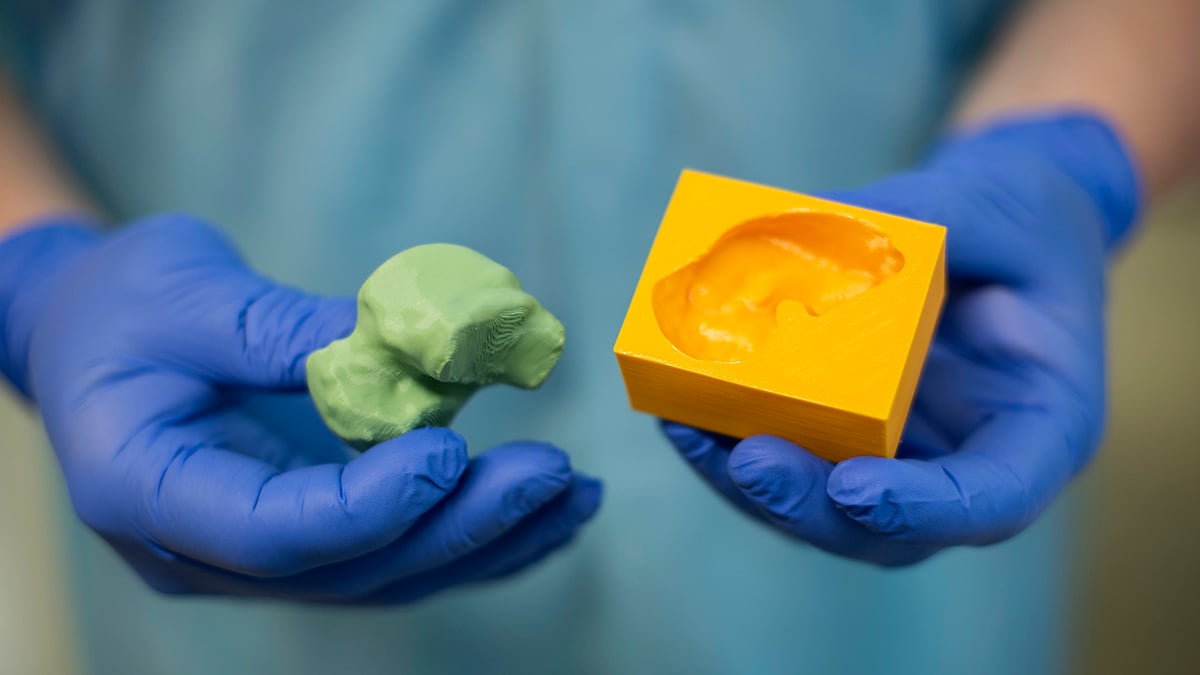
- SolutionBefore the permanent titanium implant could be placed, the joint required a placeholder. Using an in-house Prusa 3D printer and Prusament, the hospital printed a custom mould. This mould was used to cast a temporary cement spacer impregnated with antibiotics.Prototyped withPrusa SL1S SPEEDOriginal Prusa MK4S
- ValueThe 3D-printed spacer mould allowed the doctors to create a temporary placeholder. It disinfected the wound, filled the gap left by the missing bone, and allowed the patient to practice moving his leg so the joint did not stiffen while the permanent implant was manufactured.
“By 3D printing the spacer mould in the hospital, we could create a precise temporary joint that allowed the patient to rehabilitate while the titanium talus was manufactured.”
Assoc. Prof. Milan Krtička, MD, PhD., head of the Trauma Surgery Department at the Brno University Hospital

Sizing the titanium implant on 3D‑printed anatomical models
- ProblemDesigning a custom titanium talus requires precise individual measurements, as there are no universal dimension tables for the bone. Furthermore, standard CT scans do not accurately capture the cartilage and soft tissues that interact with the implant.
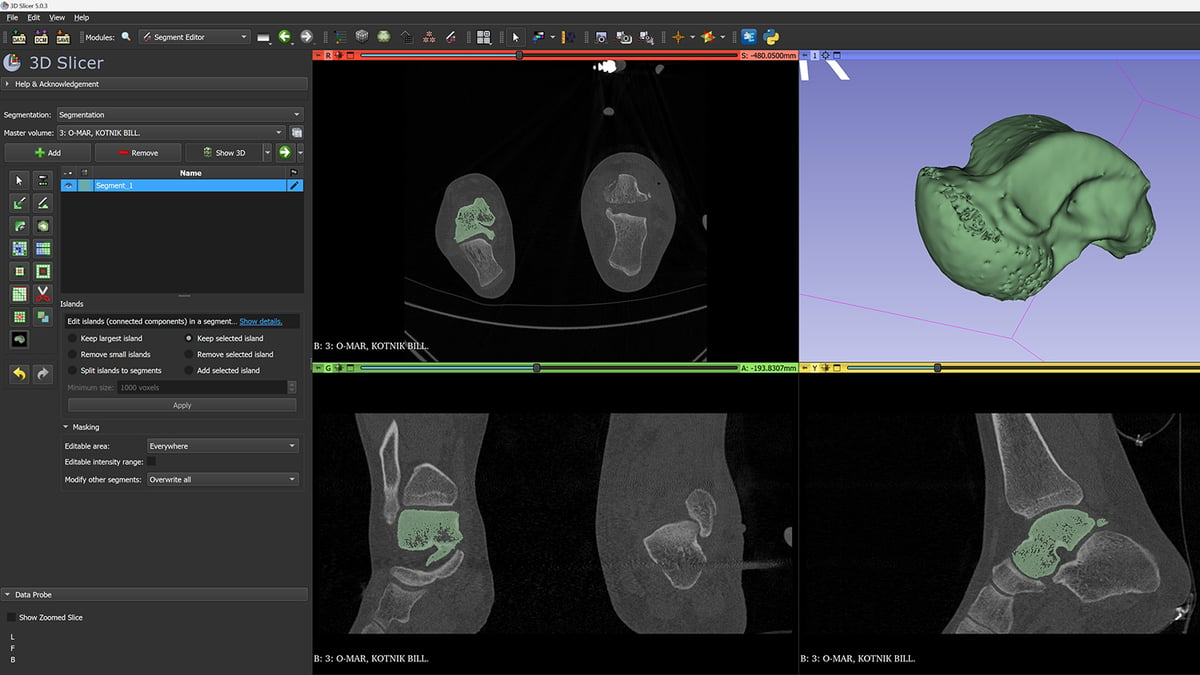
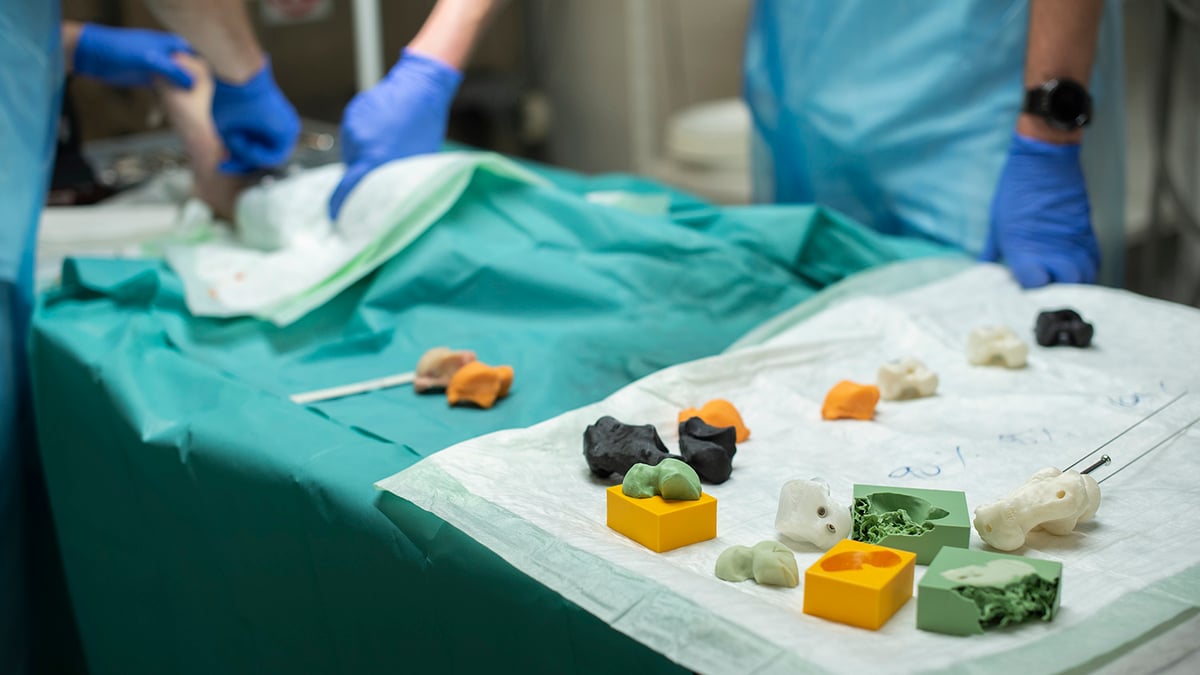
- SolutionDoctors mirrored CT images of the patient's healthy leg to create a baseline model. The trauma team collaborated with Masaryk University and the Institute of Anatomy to 3D-print plastic models of the bone, taking them into the dissection room to determine the exact required dimensions.
- ValueBy relying on highly accurate 3D-printed anatomical models, the team could physically verify the dimensions, test the mechanical properties, and plan exactly where to insert the fixation screws before the titanium piece was manufactured.
“Since there are no textbook dimension tables for a talus bone, 3D-printed plastic models were essential to determine the exact size of the custom implant.”
Assoc. Prof. Milan Krtička, MD, PhD., Head of the Trauma Surgery Department, University Hospital Brno

Surgical preparation and successful implantation
- ProblemA unique procedure involving a custom titanium implant requires extensive preoperative planning. Every detail must be validated to ensure the hardware fits perfectly and functions correctly before the patient enters the operating theatre.
- SolutionThe medical team spent over a month preparing for the complex procedure, executing the entire operation as a dry run on the 3D-printed models first. In July 2022, the surgical team successfully implanted the permanent titanium talus.
- ValueFollowing the surgery and subsequent rehabilitation, the patient regained the ability to walk pain-free. The hospital is now documenting the procedure for European medical literature and establishing a dedicated medical 3D printing application center in cooperation with Prusa Research.

Still not sure where 3D printing fits your production?
See what other enterprise companies print, a tooling plant, a pit lane, a rail workshop, a glassworks.


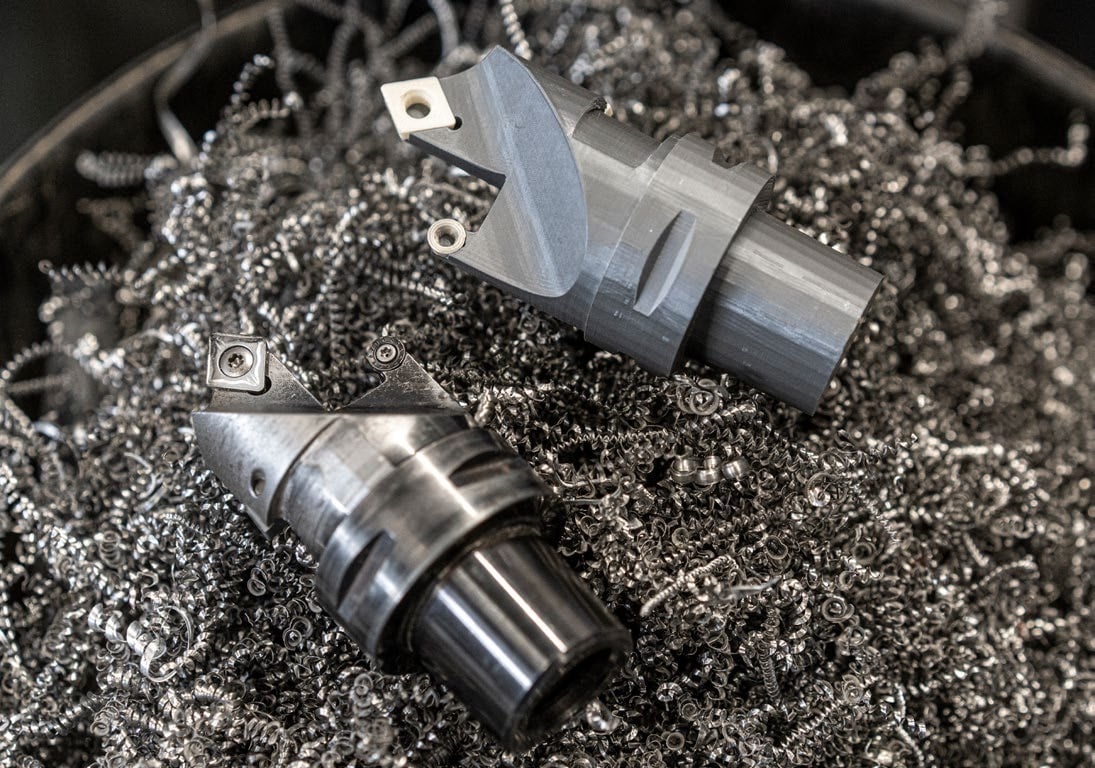
Customer story Seco Tools
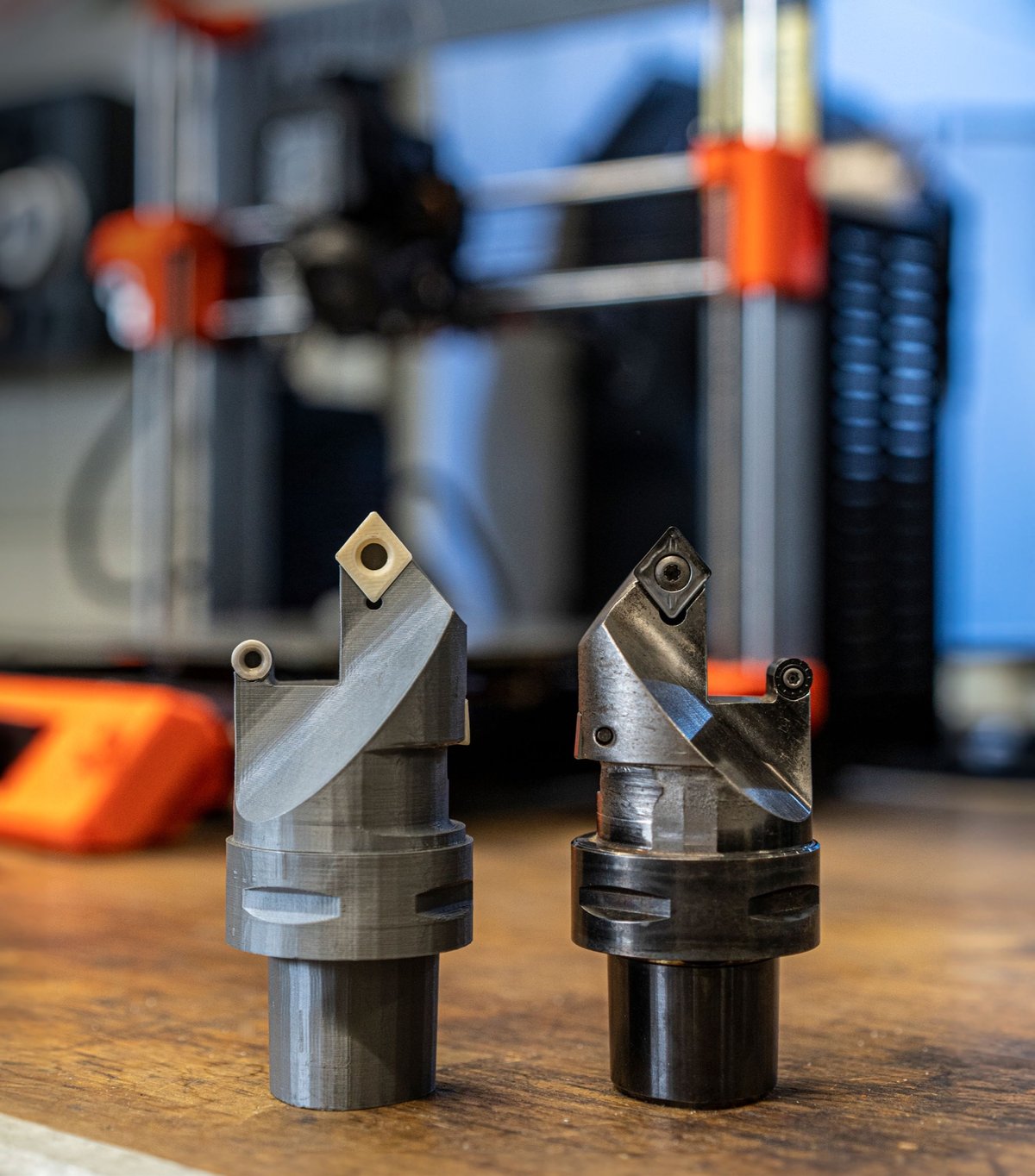
Seco Tools put a 1:1 cutting tool on Škoda’s table in four days
The Swedish tool maker’s Czech branch was asked to unblock a gearbox line where one part needed three ISO tools and almost 51 seconds. A single combined tool, printed 1:1 before it was ever cut, brought the operation to 40.2 seconds, Škoda Auto’s figure, on Škoda Auto’s line.
- 4 daysassignment to 1:1 printed model
- 10.7 scut from Škoda’s cycle time
- €10,650saved at Škoda in a year
“Thanks to 3D printing, I rediscovered my passion for innovation and industrial tool design.”







Customer story AIX Racing
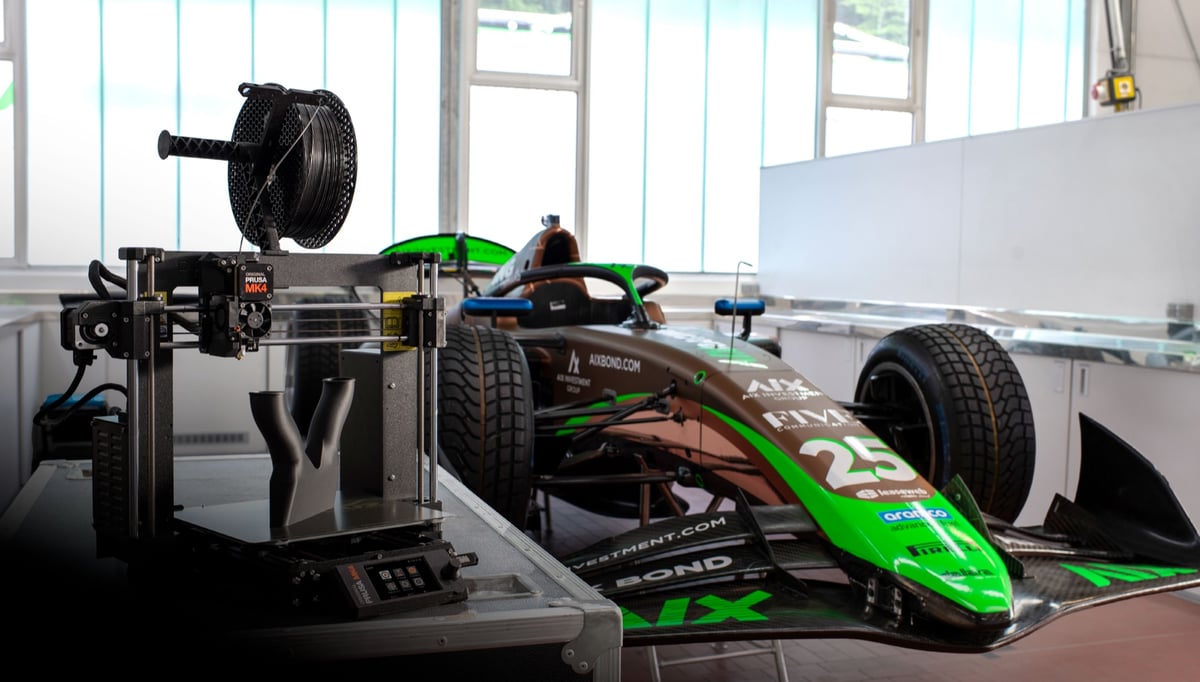
AIX Racing takes the printer to the race
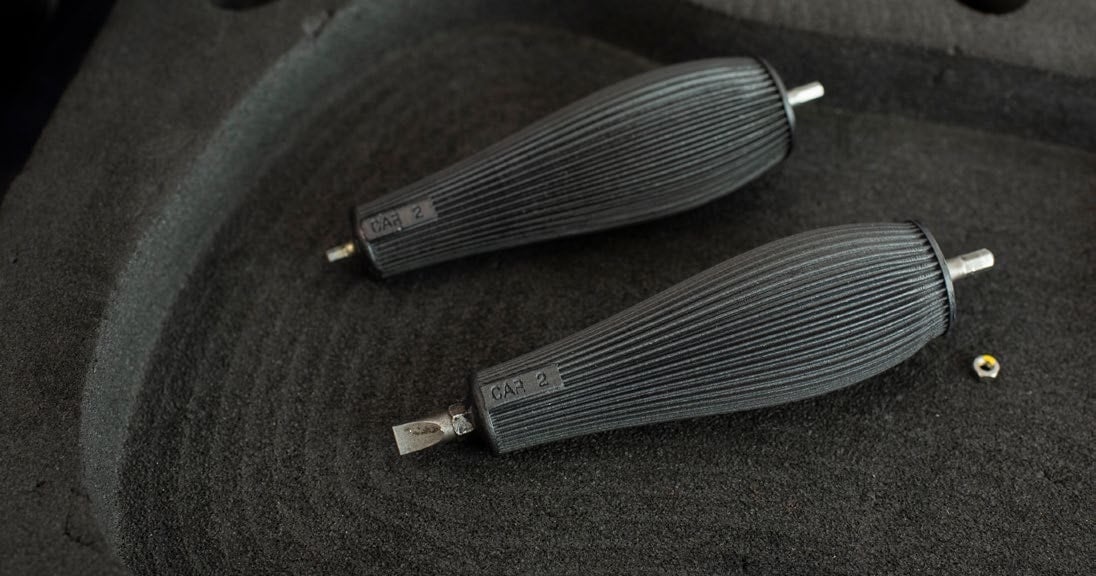
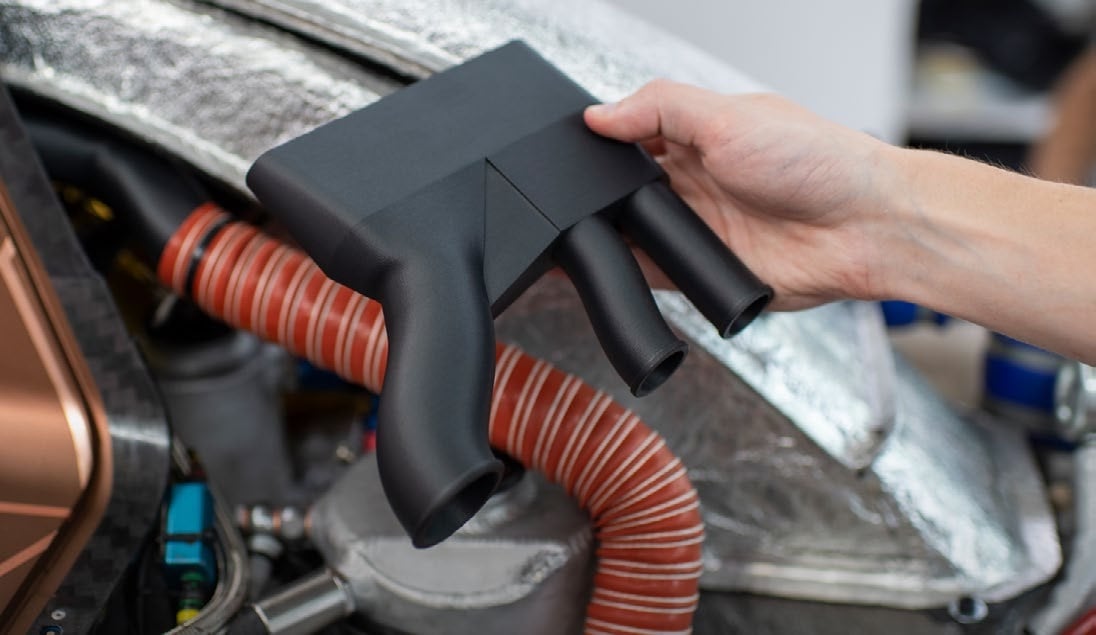
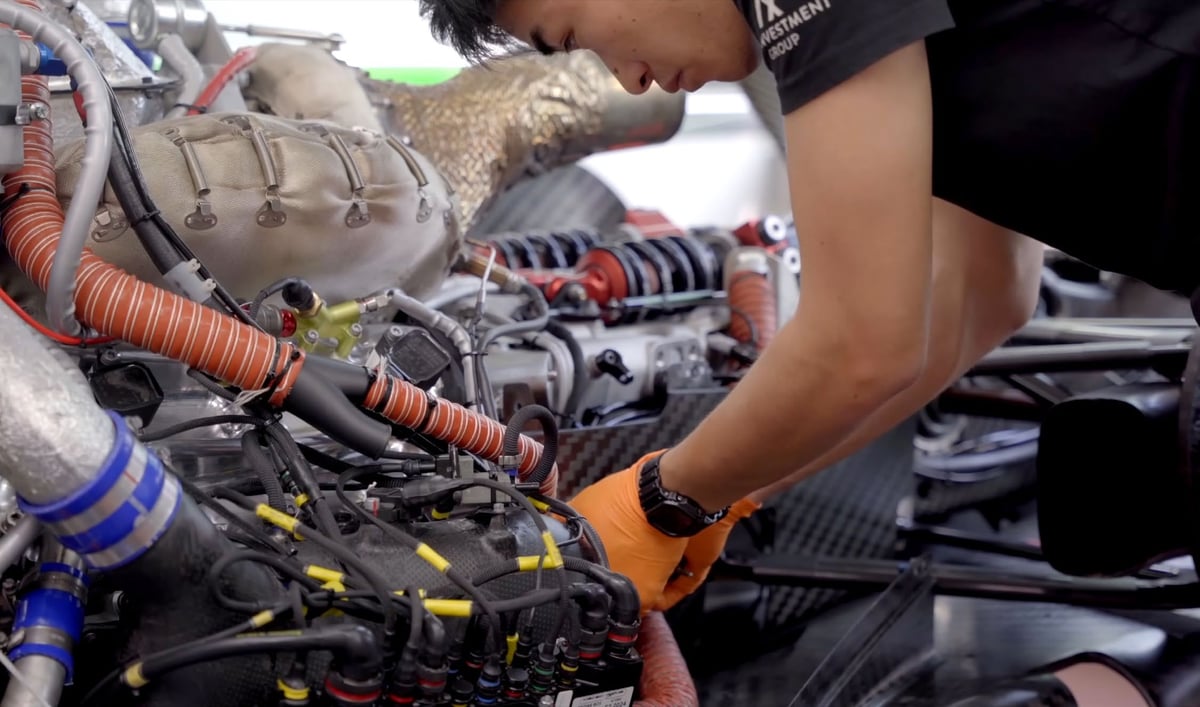
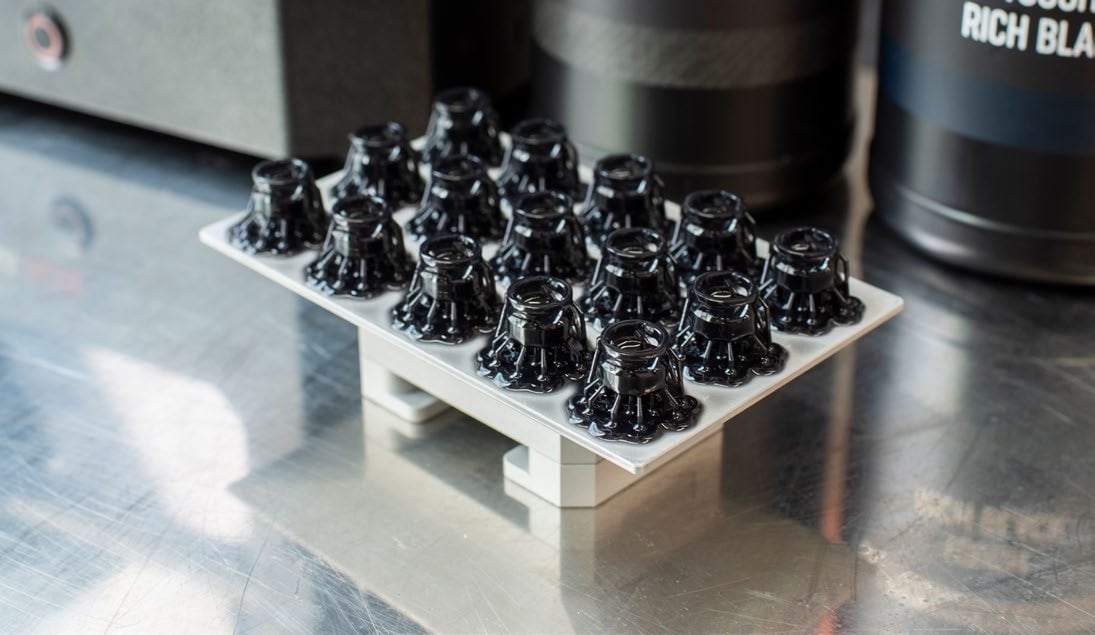
The Formula 2 and Formula 3 team runs 32 people out of Berlin and Dubai, on a calendar of 14 races where every car and engine is identical. Tools, airflow tubes and cabin parts are printed in the garage, and one machine travels to the circuit, so a repair happens on site and overnight at the latest.
- 32employees
- 14F2 races a year
- ~6days of pre season testing
“It’s just a matter of time before all Formula teams have a 3D printer.”





Customer story Knorr-Bremse
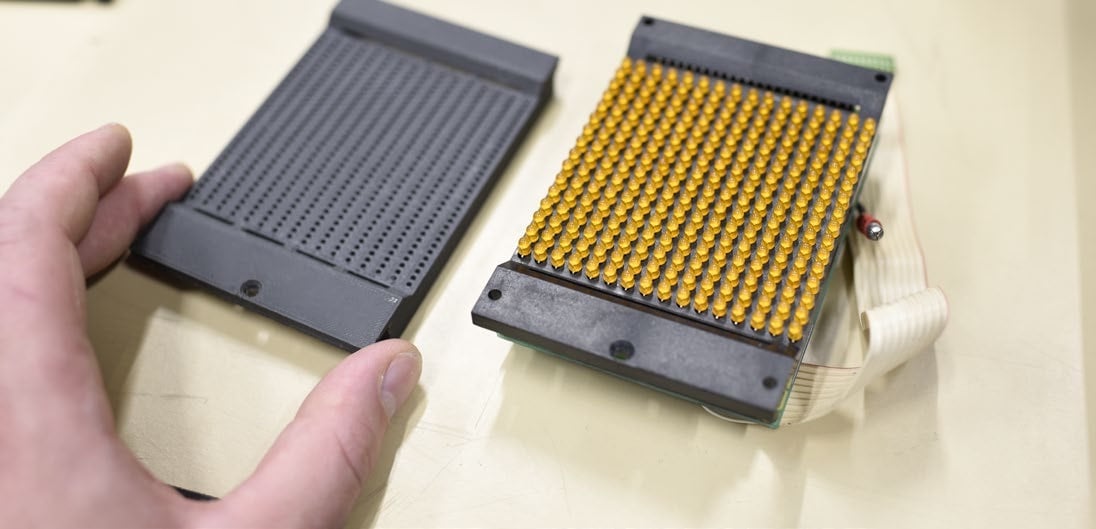
Knorr‑Bremse prints the train parts nobody makes any more
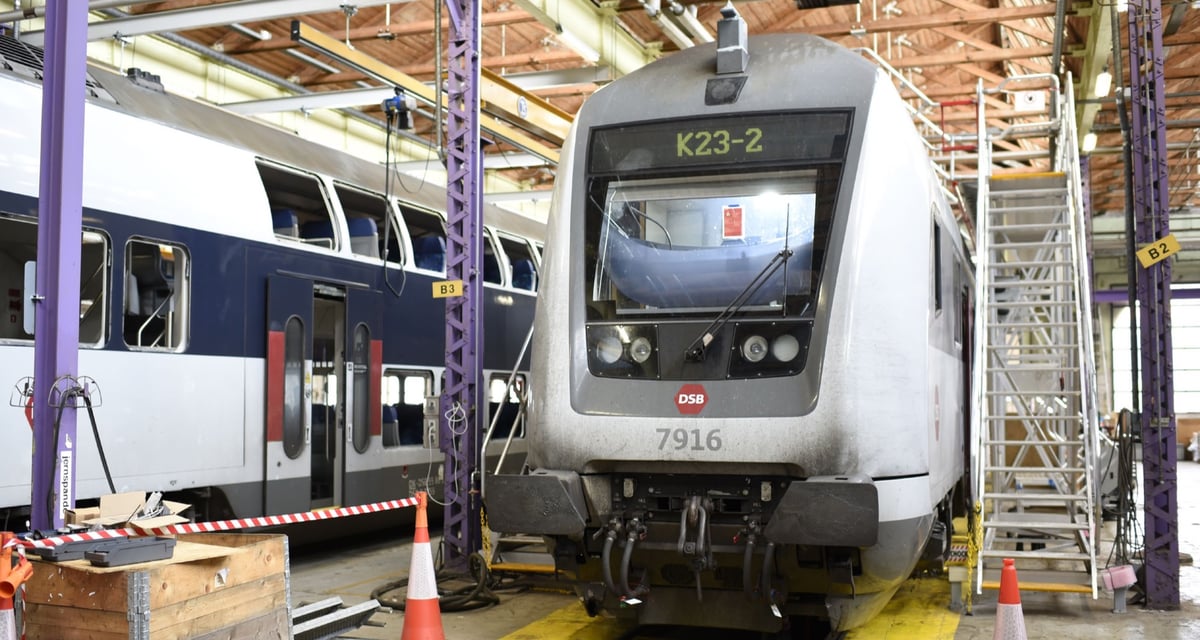
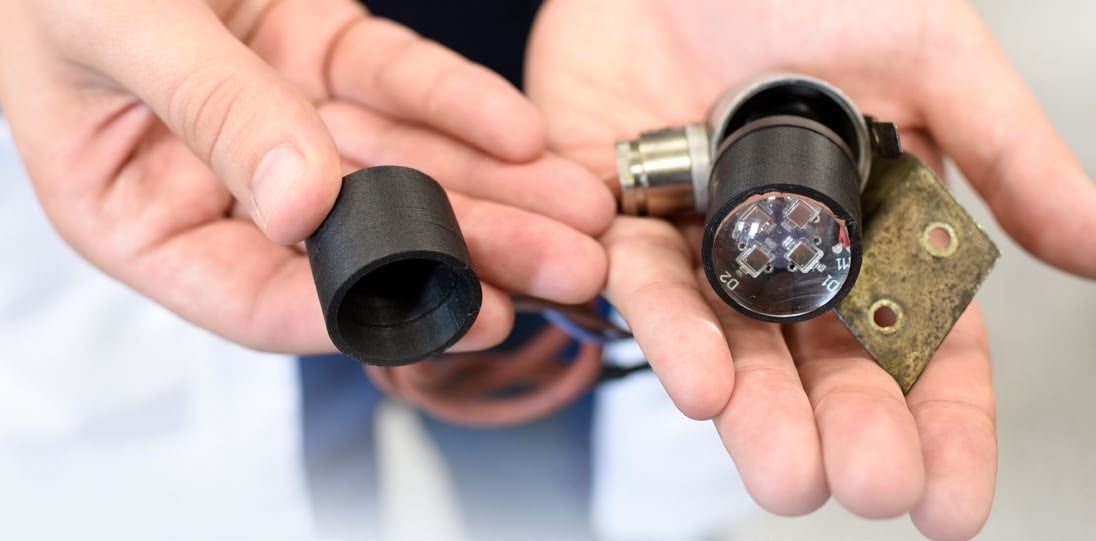
The Danish arm of the Munich braking systems group is the main service provider for DSB, the Danish state railway, and its job is obsolescence, components that are no longer available anywhere. Printing the casing of an oil burner sensor, the part that wears out and used to take the whole sensor with it, cuts that sensor’s overall cost by half.
- 33,000+employees worldwide
- 1905Knorr-Bremse founded
- 50%lower cost, oil burner sensor
“I see more and more people in the railway industry looking into 3D printing. And for good reason!”







Customer story Lasvit
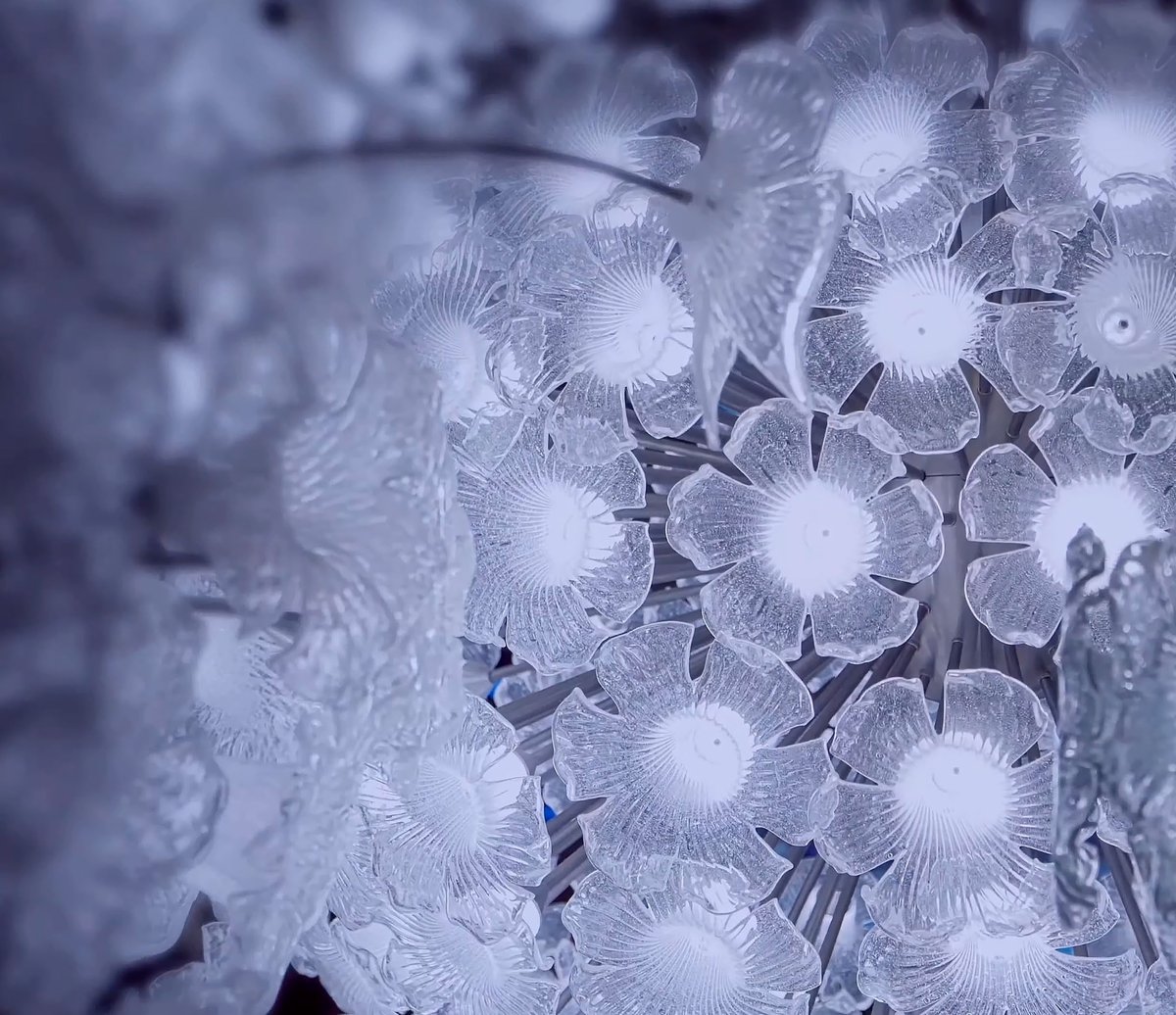
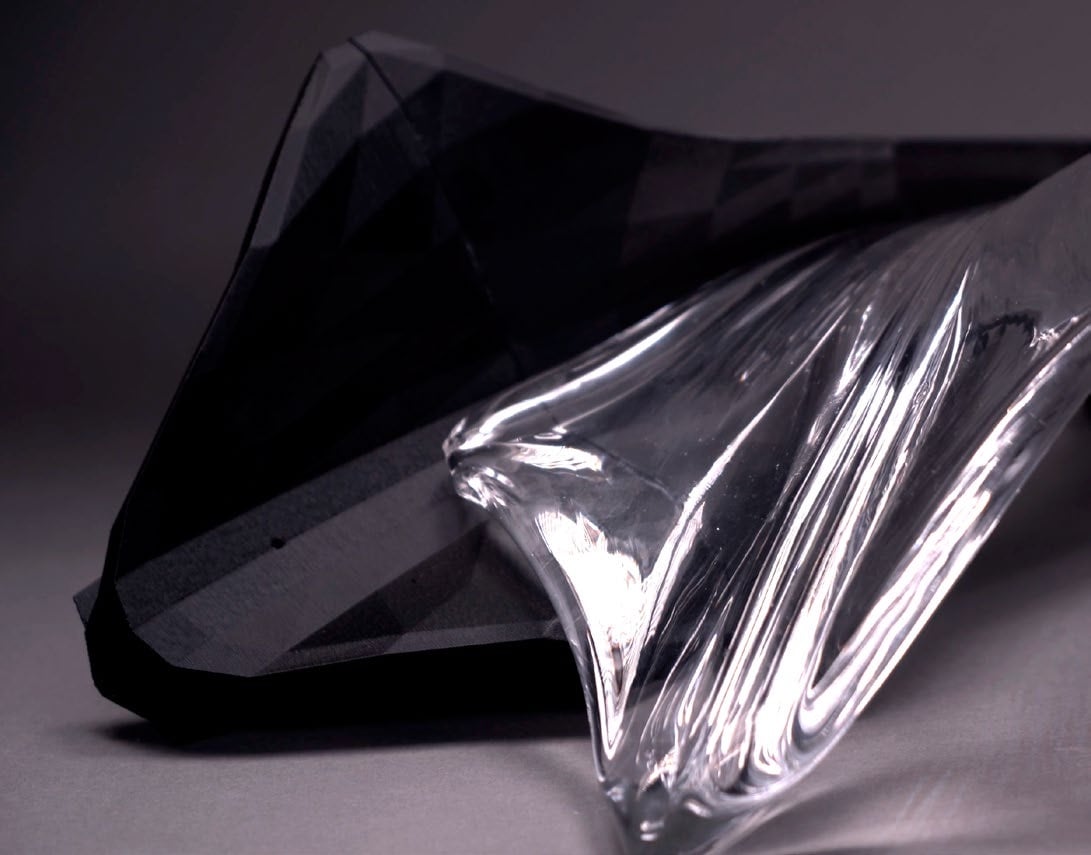
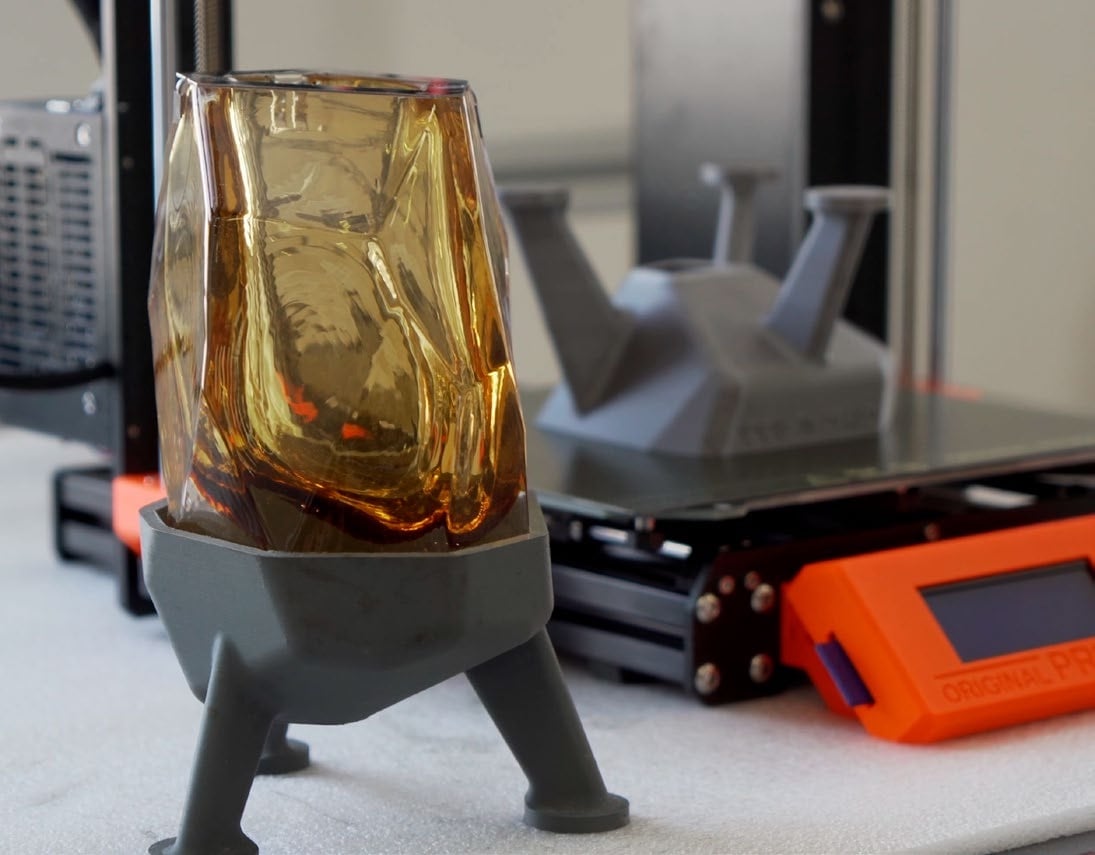
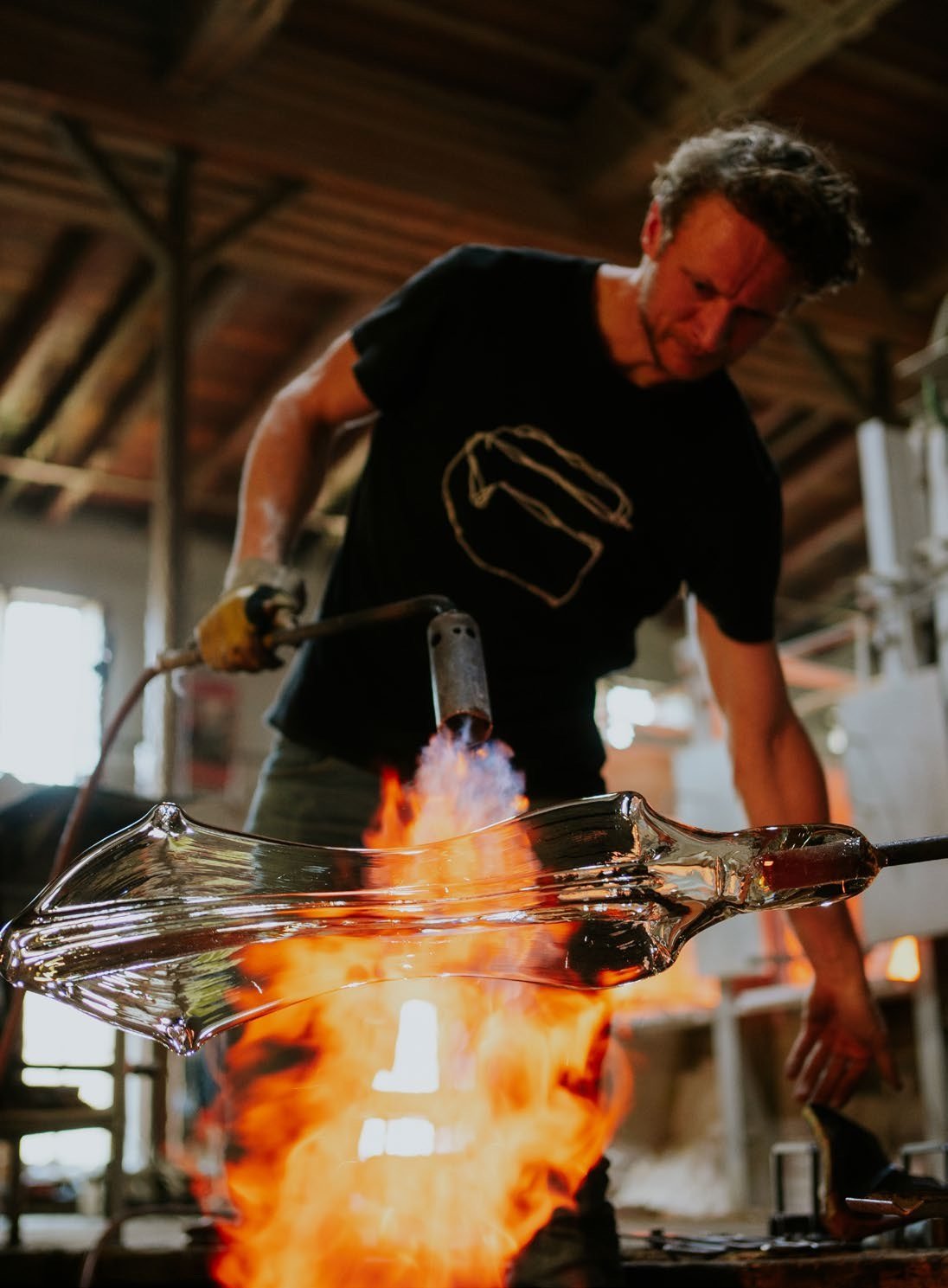
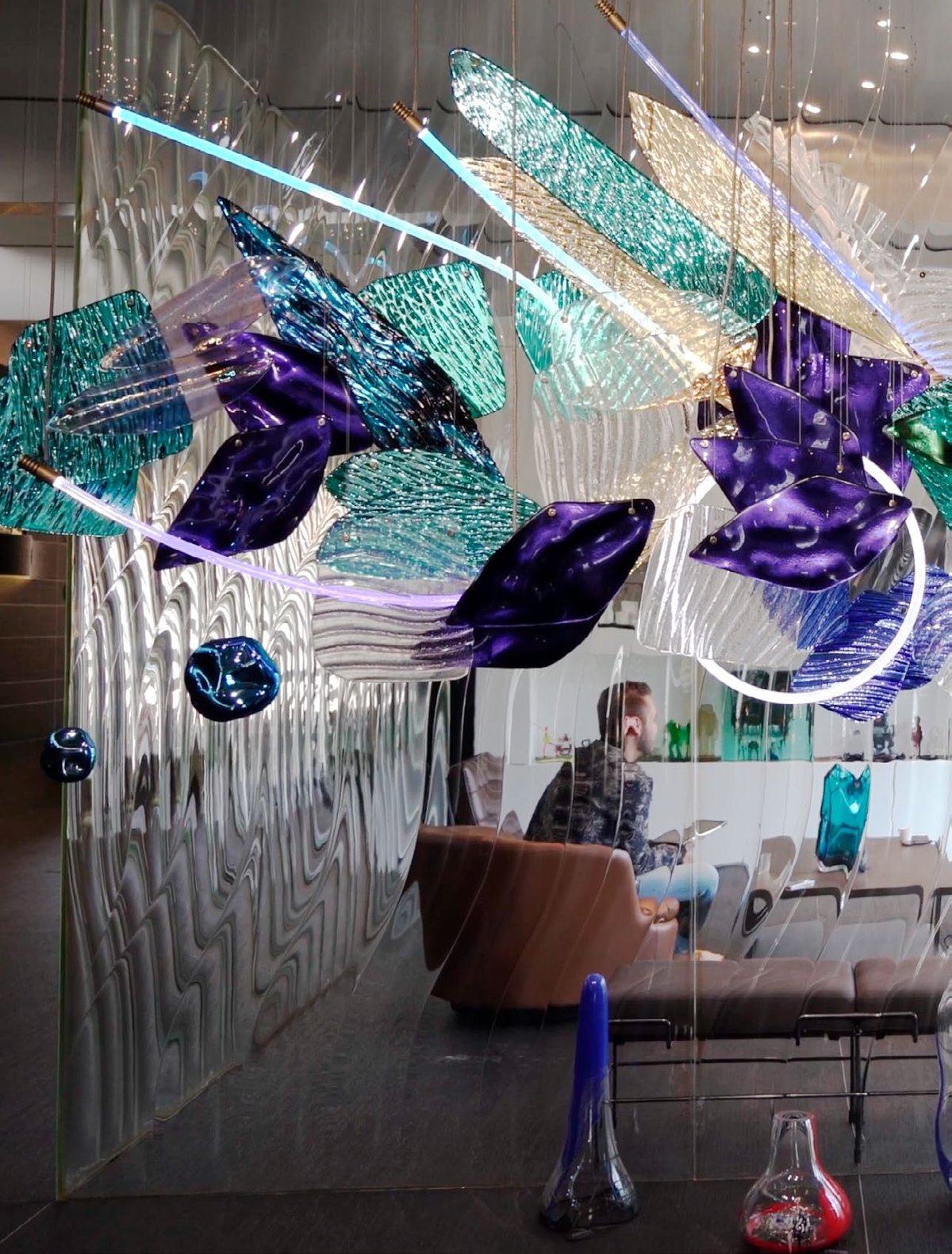
Lasvit proves the glass before it reaches the furnace
The Czech glassworks makes hand blown installations for over 2,500 hotels, public spaces and residences. Designs used to reach master glassblowers at a 1,500 °C furnace unverified, now they arrive as 100% accurate printed models.
- 300+people
- 2,500+hotels, public spaces and residences
- 1,500 °Cthe furnace the design has to survive
“Everything that goes into final production is fine tuned into perfection thanks to Original Prusa and Prusa Pro 3D printers.”


Your team’s questions, answered
What surgeons, technicians, and hospital administrators usually ask before integrating 3D printing.
Orthopedic Surgeon
Surgical planning
Hospital Administrator
In-house manufacturing
Medical Technician
Data processing