Free webinar · Mon 30 Nov 2026 · 16:00 CET
Koenigsegg on the HT90What they print, and how
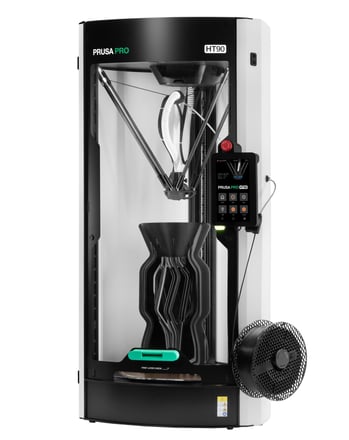
60 minutes with Koenigsegg on printing PEEK, PEKK and ULTEM parts on the Prusa Pro HT90 – brackets, ducts, fixtures instead of machining stock or waiting on a supplier. Real parts, settings, and what they run day to day.
Mon 30 Nov 2026 · 16:00 CET · 10:00 a.m. ET
Live on Zoom, recording available afterwards.
Where high-temp parts usually get stuck
Components like brackets near heat, short ducts, housings that see fuel or cleaners, and production fixtures.
Outsource it
Send the file out, wait for a quote, wait for delivery. A design change starts the wait again.
Machine it
Cut from PEEK stock or metal. Most of the material becomes chips; complex shapes cost more.
Print it in‑house
On an HT90: dry the filament, print in a heated chamber, anneal when needed. Same day iteration for parts that fit the build volume.
When every gram counts, the part has to be right.Customer story · 15 min
Koenigsegg builds its own components and cuts weight wherever it can. In this session, Kristian Ljungkvist shows how they use the HT90.
“We don't want to machine away up to 80% of expensive PEEK. Additive manufacturing lets us build only the part we need.”
Koenigsegg uses additive manufacturing from rapid prototypes to production parts.


Built around the heat.
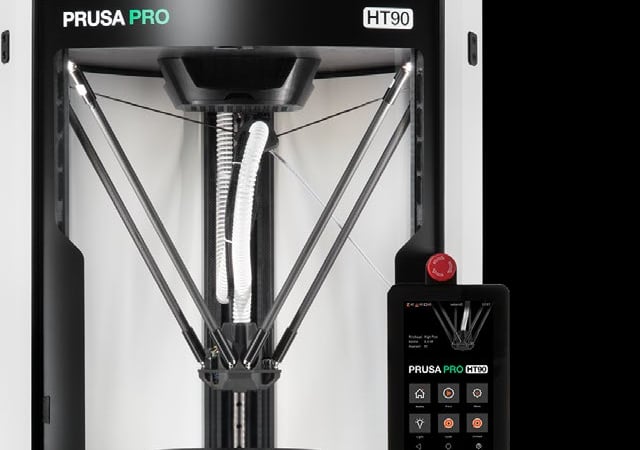
Printing PEEK or ULTEM is less about the nozzle and more about everything around it. If the part cools unevenly, it warps and its layers do not bond. The HT90 is designed to keep the whole part at a stable temperature while it prints.
Heated up to 90 °C (194 °F), not just enclosed. The part stays warm while it prints, so high-temperature layers can fuse properly.
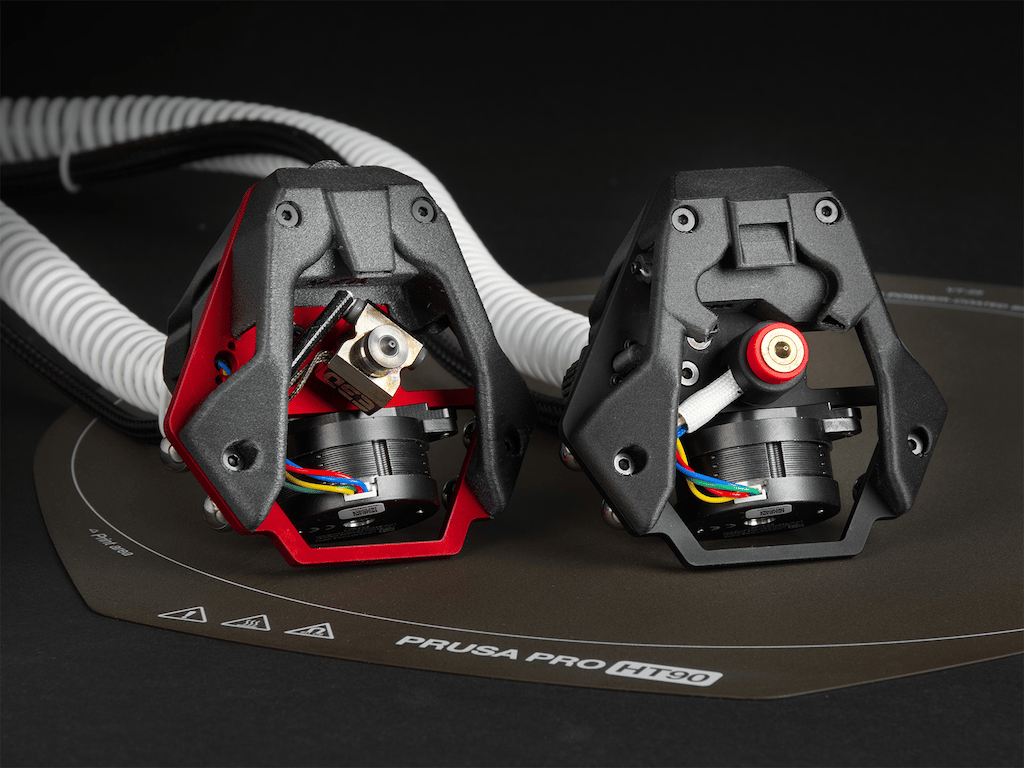
The High-Temp head melts PEEK, PEKK, PEI (ULTEM), PPSU, PSU, PPS and PES. Abrasion-resistant nozzle for filled materials.
Motors stay out of the hot chamber. The light printhead moves fast and stays precise.
Swap to the High-Flow head for PLA, PETG, ABS, ASA, PA or PC. Prototype one day, print the PEEK part the next, on the same machine.
What changes when the part is printed in-house.
Hours, not weeks
Design, print, test and change the part the same day, without a purchase order or a supplier queue.
Lighter than metal
PEEK weighs about half as much as aluminium. Swap a metal bracket or duct for a polymer one and you cut weight.
Fits a team budget
The HT90 is meant as an affordable way to print PEI and PEKK, without buying a full industrial system.
Open materials
No lock-in to one filament brand. Use Prusament or another qualified material in PrusaSlicer.
Your designs stay yours
Full offline mode with USB transfer. No cloud or internet connection required. The Wi-Fi module is removable if you work with sensitive IP.
Room for real parts
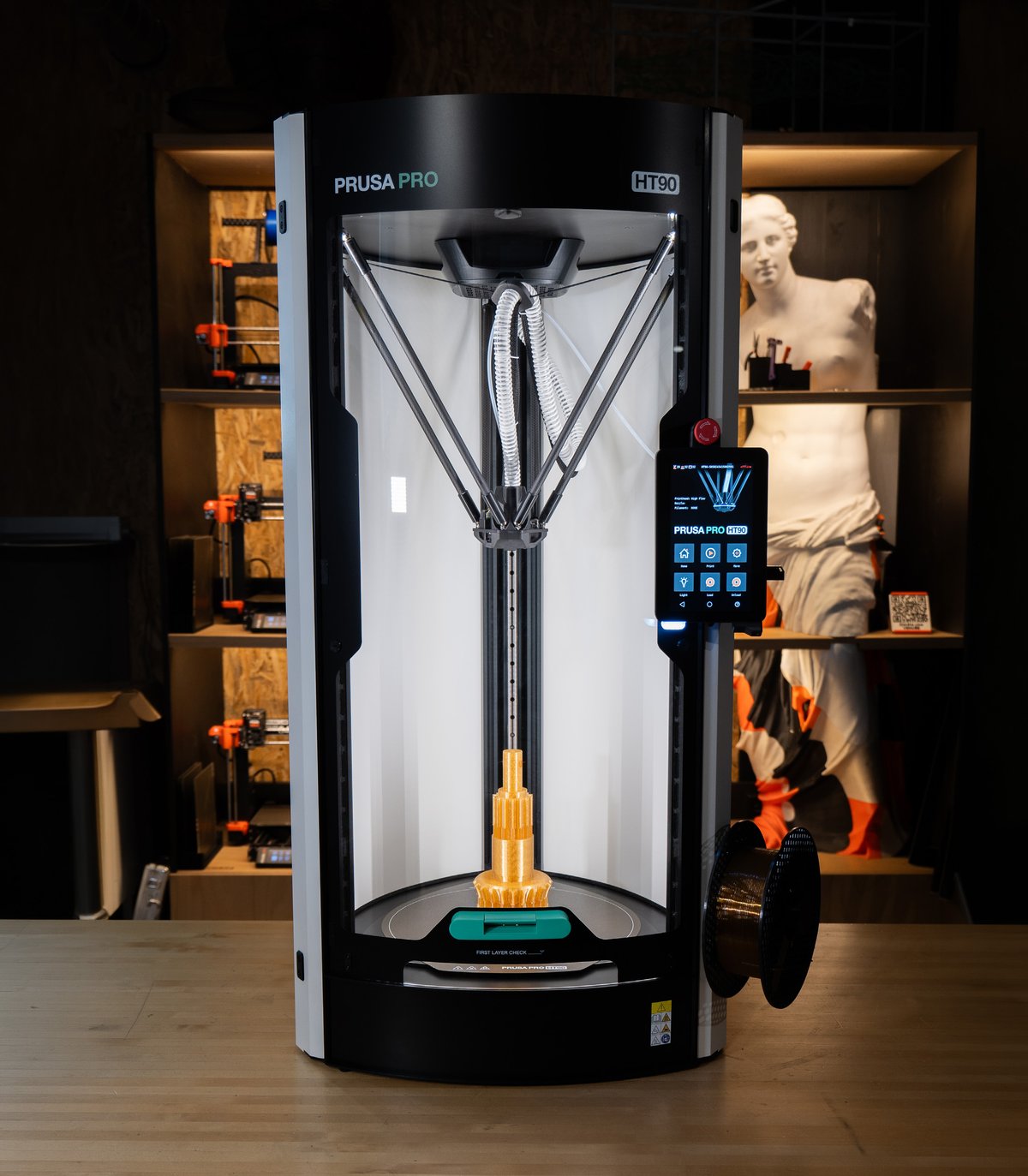
28 L cylindrical build volume, Ø300 × 400 mm (Ø11.8 × 15.7 in). Fits full-size brackets, ducts and fixtures.
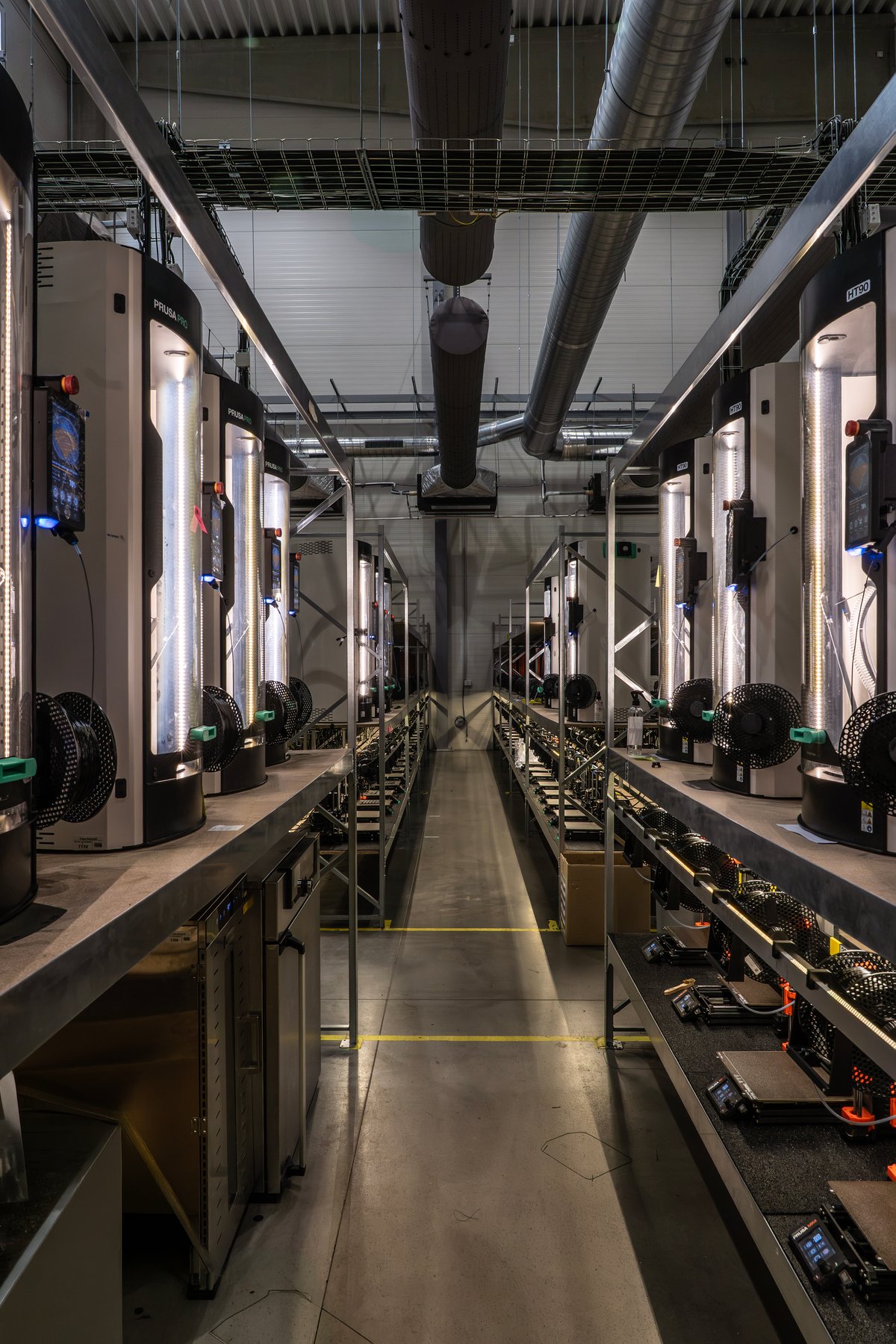
The HT90 on the shop floor
- HT90 print farm
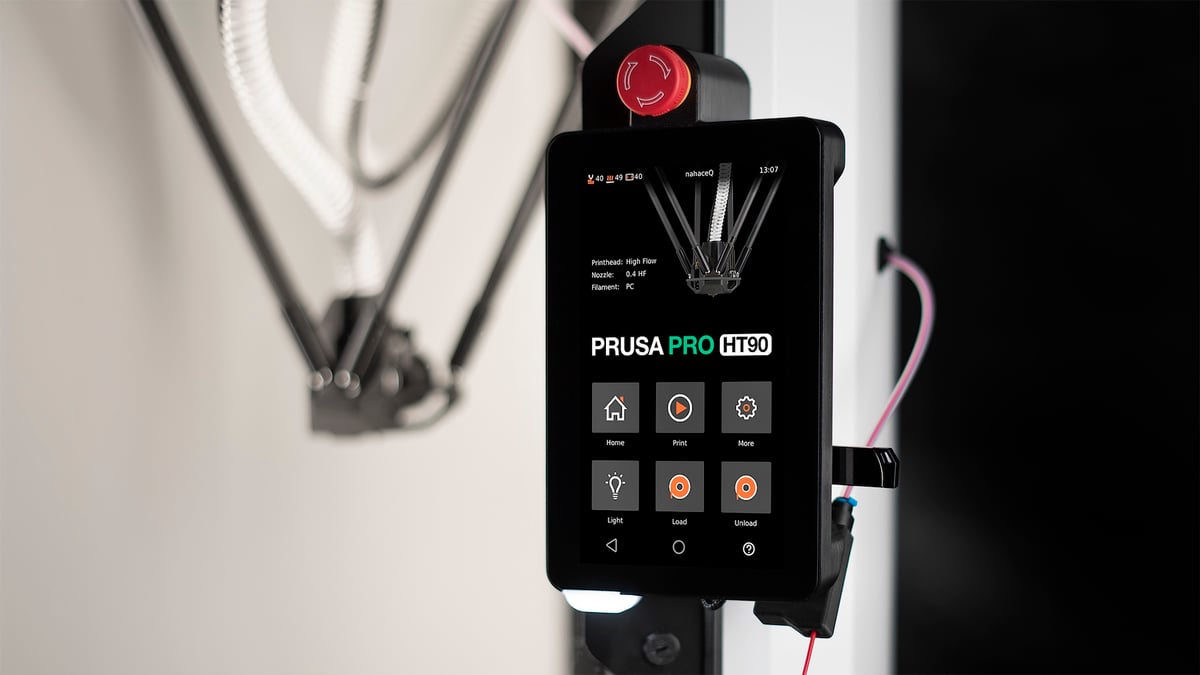
- Simple operation via touchscreen interface
- High-Temp and High-Flow heads
- Fast prototyping
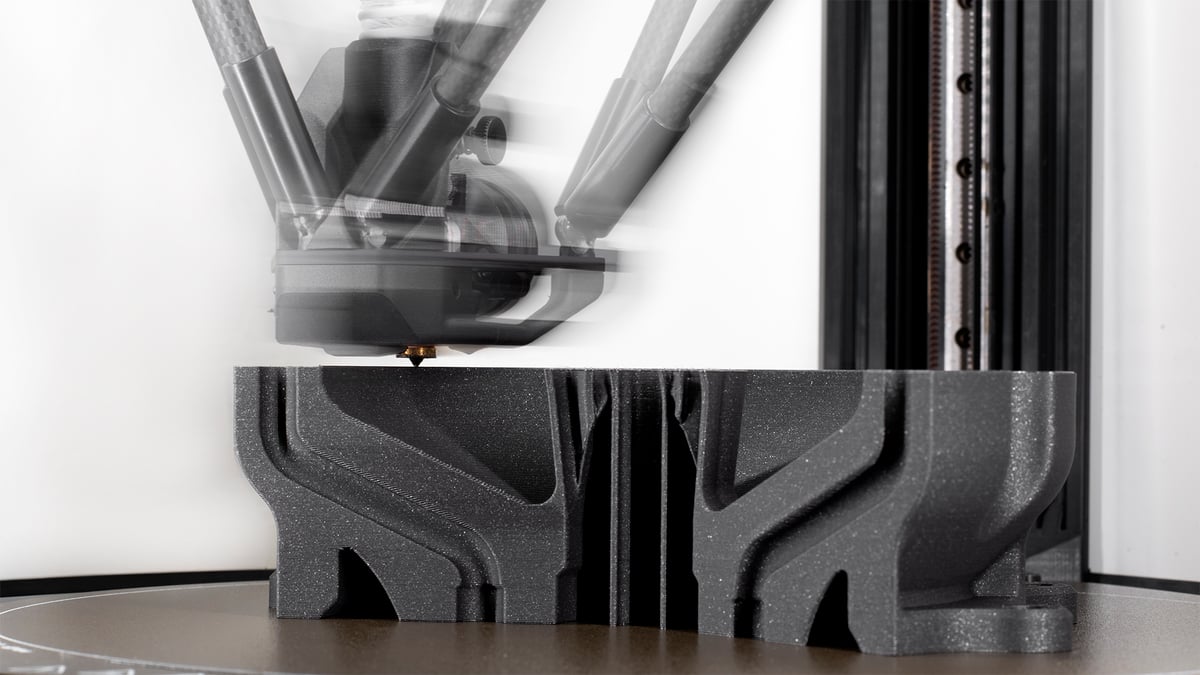
- Designed for demanding engineering polymers




Webinar agenda: 60 minutes covering hardware, materials and prints.
Speakers
Vojtech Tambor
Head of Prusa Biomedical · HT90 expert, Prusa Research


Kristian Ljungkvist
Composite Additive Manufacturing Operator, Koenigsegg


Emir Hamzic
Head of B2B Sales · Host, Prusa Research


Who should attend
Engineering and R&D teams
Automotive, aerospace, energy and machinery.
Teams outsourcing advanced polymers
PEEK, PEKK or ULTEM parts today.
Production engineers
Jigs, fixtures and tooling exposed to heat or chemicals.
Teams comparing systems
Anyone evaluating high-temperature FFF systems.