





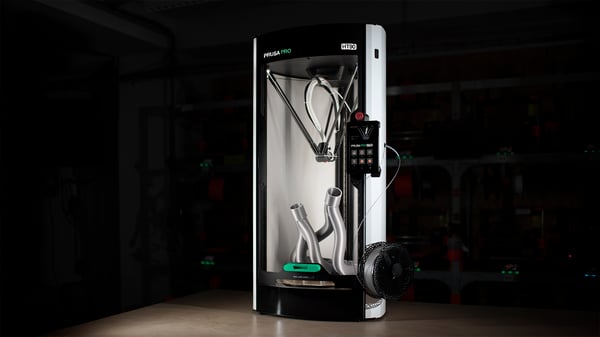

PETG
Easy to printA versatile default for shop-floor parts, housings, and general-purpose tooling. Good durability and easy processing.
Nozzle230-250 °C
Bed70-90 °C
Accelerate functional rapid prototyping, custom jigs and fixtures, and end-use part production with secure, offline-capable B2B 3D printing.
Engineering
Validate complex CAD prototypes in under 12 hours
Production Support
Custom assembly jigs and fixtures with zero tooling cost
Materials
Print with industrial polymers, carbon-fiber composites, and flame-retardants
HSE & Security
Secure, fully offline operation with CE, FCC, and UL 2904 compliance
No commitment, practical deployment advice






Trusted by leading engineering, aerospace, and manufacturing teams worldwide
Proven B2B efficiency: Verified performance outcomes from global manufacturing, automotive, and R&D deployments.
Successful additive manufacturing deployment is a gradual process. Prove the business case first with rapid prototypes, integrate it into daily shop-floor support, then scale up throughput.
Start with the lowest-hanging fruit: rapid prototypes and simple jigs. Eliminate engineering wait times and demonstrate immediate ROI without disrupting your existing processes.
Once the first wins are clear, expand into a dependable daily workflow. Give maintenance and production teams on-demand access to custom parts to cut reliance on external suppliers.
When internal demand outgrows a single machine, shift your focus to throughput. Transition to a structured print farm to make output repeatable, centralized, and ready for continuous 24/7 production.
At CERN, teams build and maintain highly specialized scientific equipment. Because custom parts are the rule rather than the exception, they operate several print farms of Prusa 3D printers. It helps engineers turn one-off requirements into physical components quickly, without waiting on external suppliers.
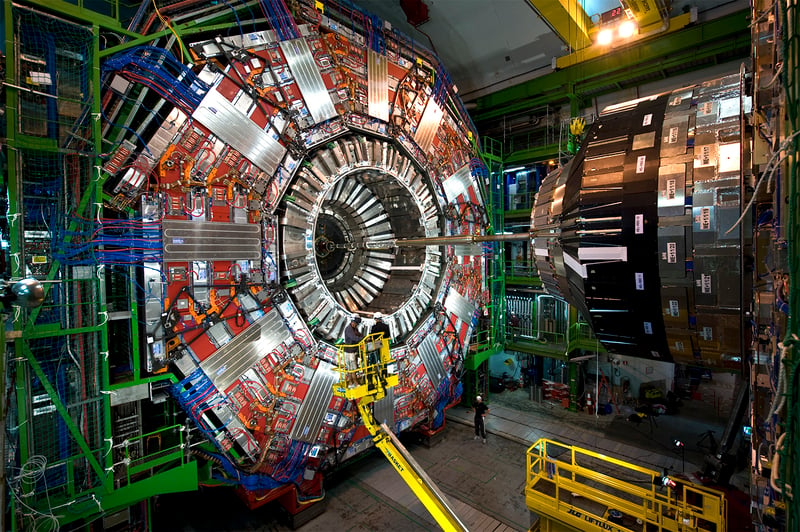
Engineers at CERN design and produce specialized sensors, control systems, and accelerators to measure and adjust the positions of large magnets. Because even minor geological movements can disrupt the alignment of the collider, the team relies on stretched wires and highly precise sensor arrays. 3D printing enables the rapid creation of these complex, customized components, including polycarbonate parts installed directly in the tunnel, which would be difficult or impossible to produce using traditional machining methods.
When a component needs to be tested in context, in-house printing facilitates rapid prototyping and iterative design improvements. It is crucial during the testing phase to ensure the reliability of tools, reducing costs by minimizing the need for expensive materials.
The technology allows teams to quickly solve operational bottlenecks. For instance, in the CLEAR accelerator project, a 3D printed robotic solution was developed to enable efficient, safe sample swapping without interrupting the radiation beam.
““3D printing makes complex tasks much simpler.””

Start with the use cases that deliver the fastest payoff: prototyping, tooling, end-use parts, and spare parts.
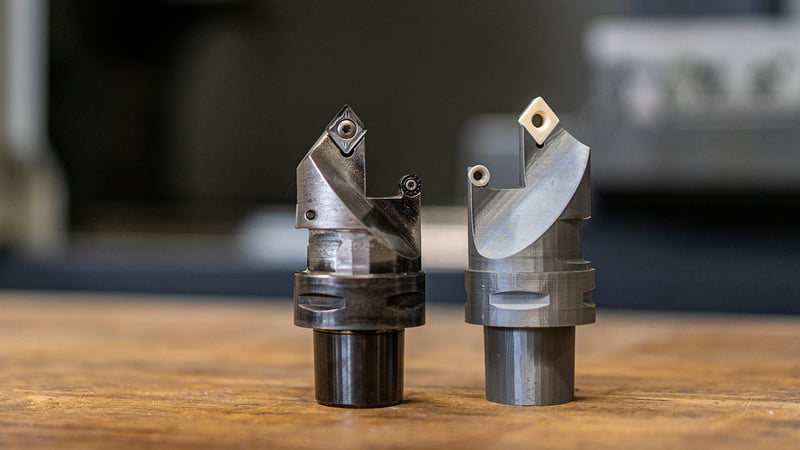
Turn CAD designs into physical parts on the same day. Engineers validate form, fit, and assembly function instantly, bypassing external machine shop backlogs and vendor lead times.
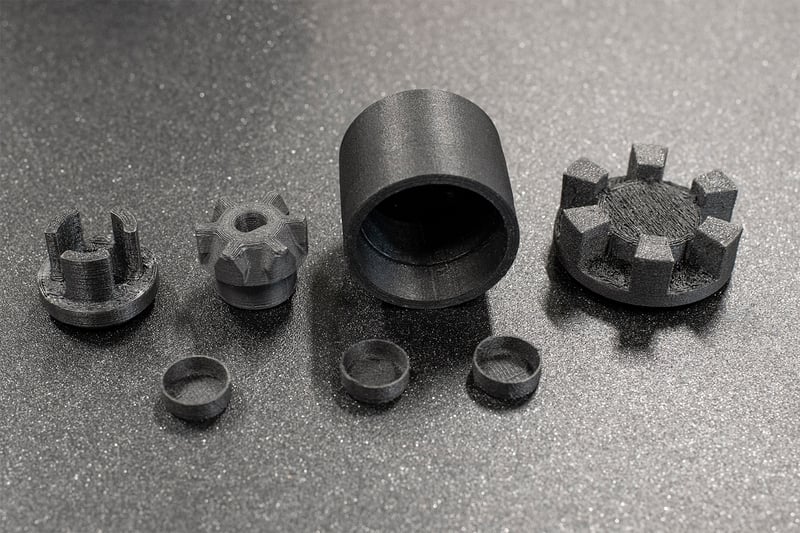
Fabricate lightweight, ergonomic, and low-cost manufacturing aids in a matter of hours. Custom 3D-printed templates, jigs, and fixtures streamline manual assembly, reduce worker fatigue, and optimize QC.
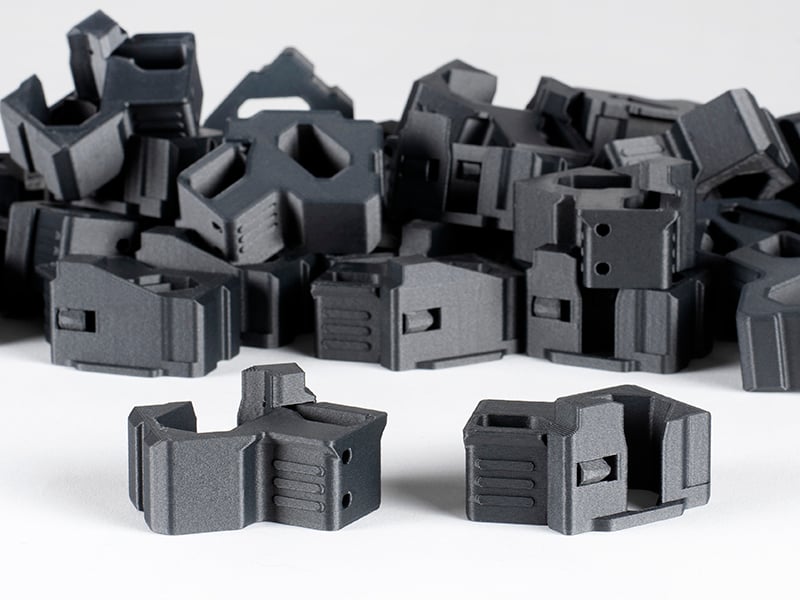
Avoid high tooling fees and injection molding MOQs. For low-to-medium volume production, 3D print end-use parts with complex internal geometries, integrated channels, or personalized specifications.
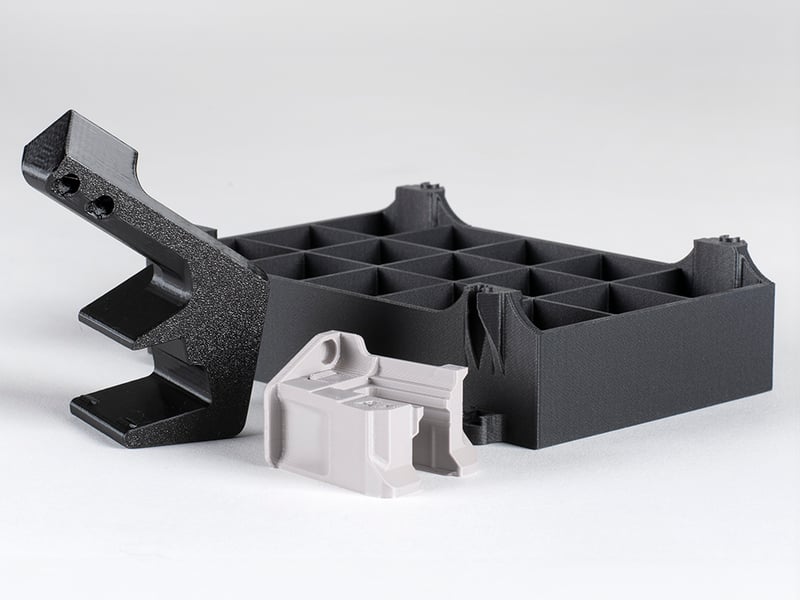
Replace physically stocked replacement parts with a secure, instant digital inventory library. Print spare brackets, gears, and enclosure covers on-demand to safeguard against equipment downtime.
Do not choose a printer by specs alone. Choose one your team can run reliably, support internally, and justify as part of day-to-day operations.
A manufacturing printer should produce consistent results without constant tuning, supervision, or unpredictable downtime.
Look for practical material coverage for your real jobs: everyday prototypes, stronger engineering parts, heat-resistant parts, or safety-oriented applications.
Many teams need to keep CAD files, slicing, and production data in-house. Offline-capable workflows matter in real manufacturing environments.
Low downtime depends on documented maintenance, replaceable wear parts, and support that understands business-critical urgency.
A good business setup should help non-specialists get useful parts fast, without needing a dedicated additive expert from day one.
The printer has to work operationally as well as technically: reasonable material costs, low running costs, and a clear ROI on the first useful applications.
The right setup depends on what you need first. Start with what solves your most immediate problem, then move into larger systems, tougher materials, or structured farm workflows when real demand requires it.
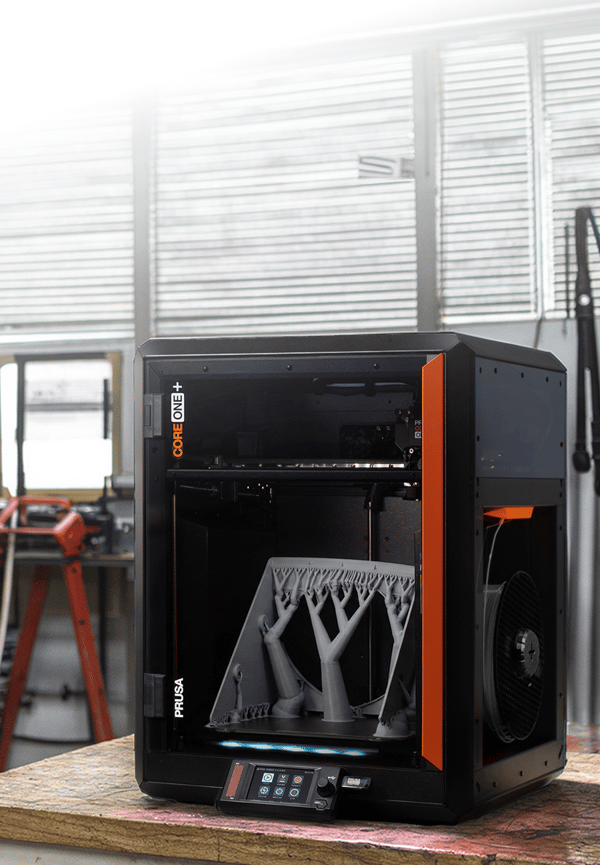
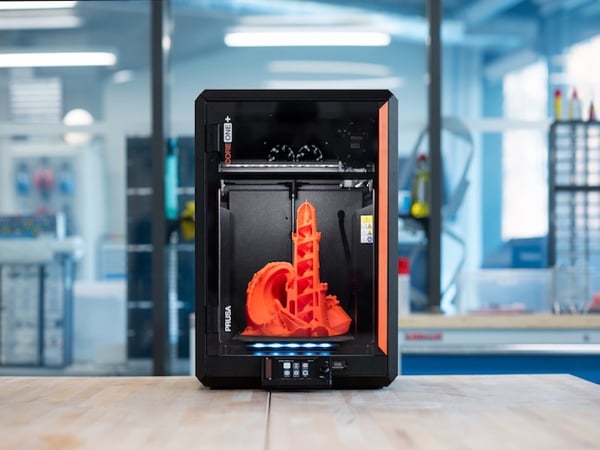
A fully enclosed, high-speed CoreXY system designed for advanced engineering materials. It brings industrial-grade reliability, active chamber temperature control, and secure offline-capable operation directly to your workshop.
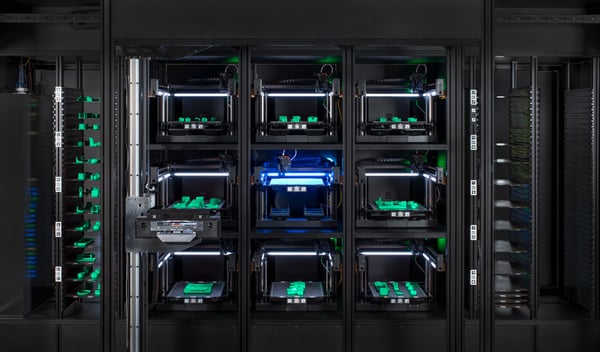
The Automated Farm System (AFS) is Prusa's automated smart farm for teams that need structured 24/7 output, centralized print management, and a highly scalable, hands-off additive workflow.
Most B2B buyers do not need a perfect spreadsheet first. They need a clear way to estimate when in-house printing will pay back.
PrusaSlicer is free and open-source.
Power use is modest compared to traditional shop equipment.
One spool of industrial PETG or ASA can replace multiple outsourced prototype revisions or custom brackets.
Prusa systems are designed to be serviceable in-house.
Upload your 3D models (STL, OBJ, or 3MF) to calculate exact print time, material weight, and production costs on Prusa industrial systems.
Your file is processed entirely in your browser and never uploaded to our servers.
“I see more and more people in the railway industry looking into 3D printing. And for good reason!”
Knorr-Bremse Rail Systems Denmark reduces obsolescence by using 3D printing to repair or replace train parts that are no longer available. By printing durable cases for oil burner sensors using self-extinguishing Prusament PETG V0, the team successfully meets strict safety certifications and cuts overall component replacement costs by half.

A targeted selection of industrial polymers proven to handle real shop-floor applications: from everyday fixtures to heat-resistant functional parts.
A versatile default for shop-floor parts, housings, and general-purpose tooling. Good durability and easy processing.
Great for functional parts exposed to heat, sunlight, or more demanding workshop environments.
For stronger engineering parts where stiffness and thermal resistance matter more than print simplicity.
Useful for regulated or safety-sensitive applications where self-extinguishing behavior matters.
A strong option for lightweight but stiff functional parts where durability and a more engineering-oriented material profile matter.
Useful for seals, protective pads, compliant fixtures, and parts that need impact absorption or controlled flexibility in day-to-day manufacturing use.
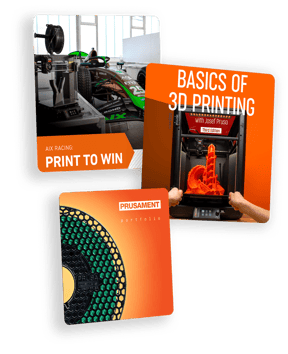
Case studies, 3D printing fundamentals, and the Prusament portfolio in one practical starter kit for manufacturing teams evaluating in-house additive workflows.
EDS Robotics builds specialized automation systems for sectors where downtime is not an option. By integrating Prusa 3D printers directly into their development and production workflows, they have shifted from waiting on external machine shops to validating functional elements in real-time.
Components that previously required at least two days to create via traditional machining are now produced as 3D-printed models for functional testing in just a few hours.
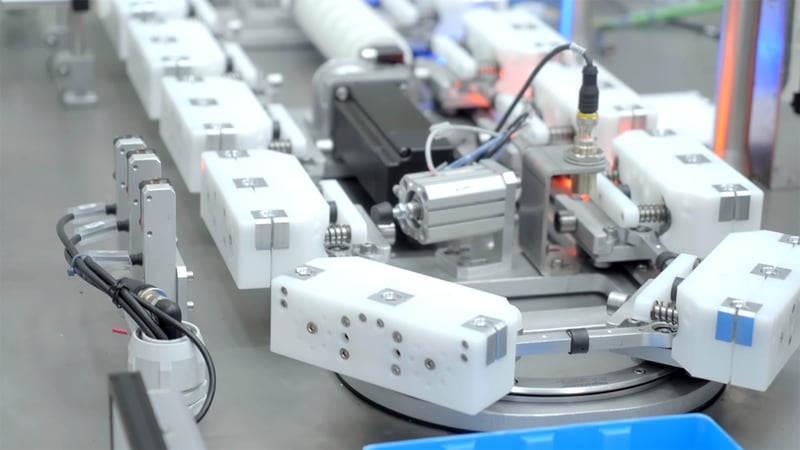
3D printing is used to produce final functional parts in every single automation project. These components include customized robotic gripper claws designed to handle diverse products carefully and gently, versatile camera holders, and protective covers that shield critical elements like wiring during robot movement. Depending on the application requirements, these end-use parts are manufactured from varied materials, including PLA, flexible filaments, and, more recently, carbon fiber to achieve high performance and long service life.
To calibrate machines for food shapes without using real food that deteriorates, the team prints realistic plastic props (e.g., donuts, broccoli, salmon) to ensure handling precision.
“We start printing in the morning, and in the afternoon, we are already testing the parts on the machine.”

Our systems are built to meet the rigorous safety and security standards of modern industrial and research environments.
Before deployment
These are the operational topics that usually need sign-off from engineering, HSE, or IT departments.
Prusa Research is ISO 9001, 14001, and 45001 certified. Our headquarters and production facilities operate under global standards for quality management, environmental responsibility, and occupational health.
Protect your intellectual property with hardware designed for high-security environments. Our systems offer fully offline operation via USB or secure, encrypted local network protocols with no mandatory cloud connection.
Minimize operational risk with high-availability hardware. We provide extensive documentation, readily available spare parts, and a design philosophy that allows for fast, in-house maintenance without proprietary lock-in.
Compliance is built-in with CE, FCC, and RoHS certifications. Furthermore, our systems meet the UL 2904 standard for low particle and chemical emissions, supporting safe use in labs, offices, and schools.
See how in-house 3D printing is transforming production and solving specific engineering challenges across other specialized sectors.
From custom assembly jigs and fixtures to spare parts for heavy rail and specialized aircraft components.
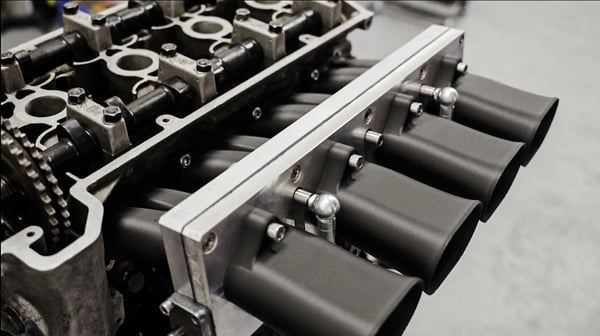
Move from CAD to physical site models faster. Iterate on structural designs with precise, durable scale prototypes.
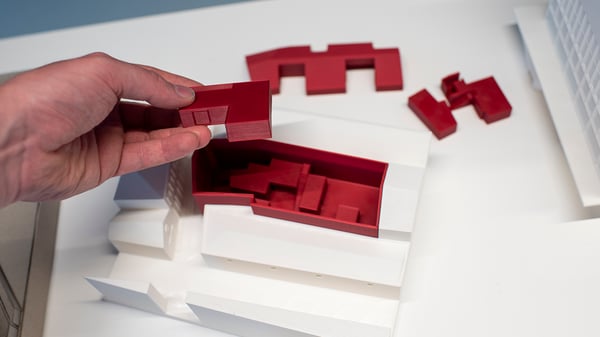
High-detail props, durable costume elements, and complex set design for the world’s leading film and VFX studios.

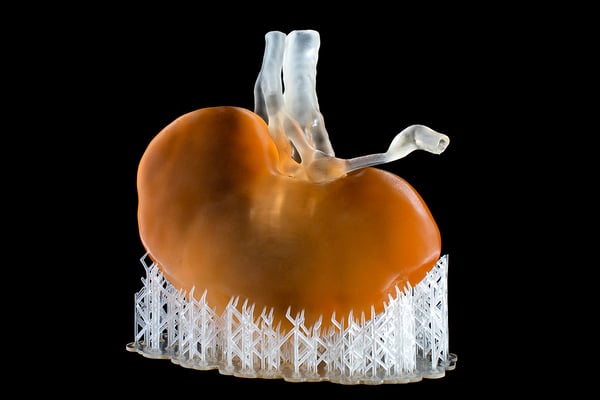
Produce patient-specific anatomical models, surgical guides, and biocompatible dental appliances with high precision and certified medical-grade materials.
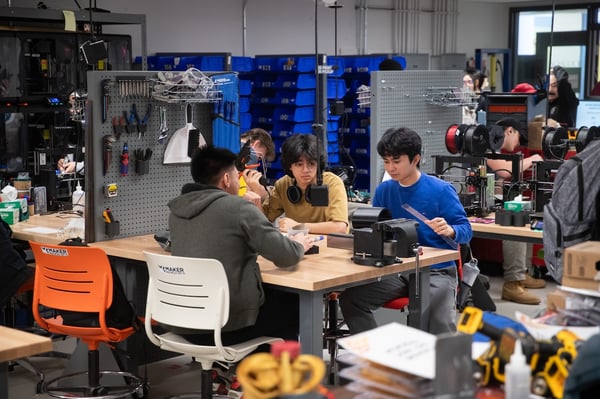
Empower the next generation of engineers or accelerate scientific breakthroughs with reliable hardware for complex laboratory equipment and rapid R&D prototyping.
Before you scale: Practical answers for engineering and procurement teams.